Last updated October 31, 2026
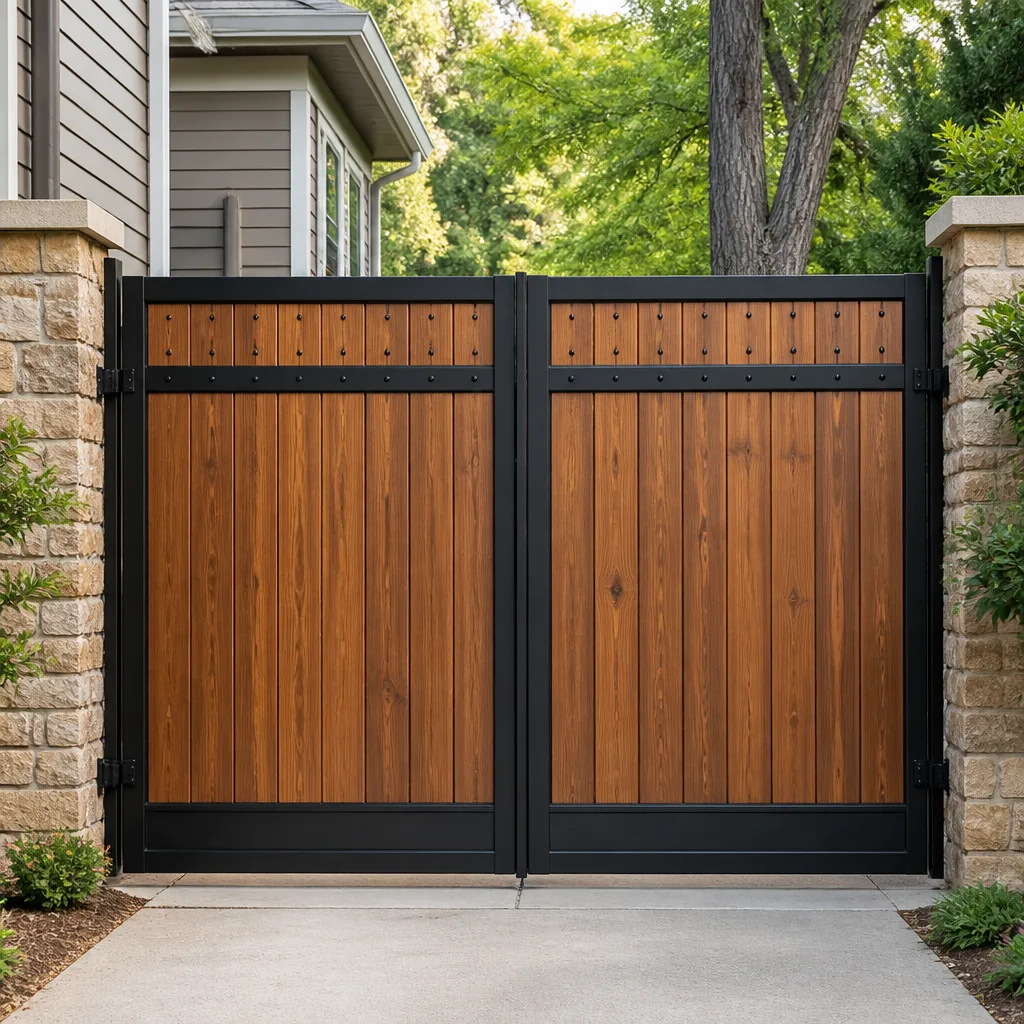 Wood & steel frame
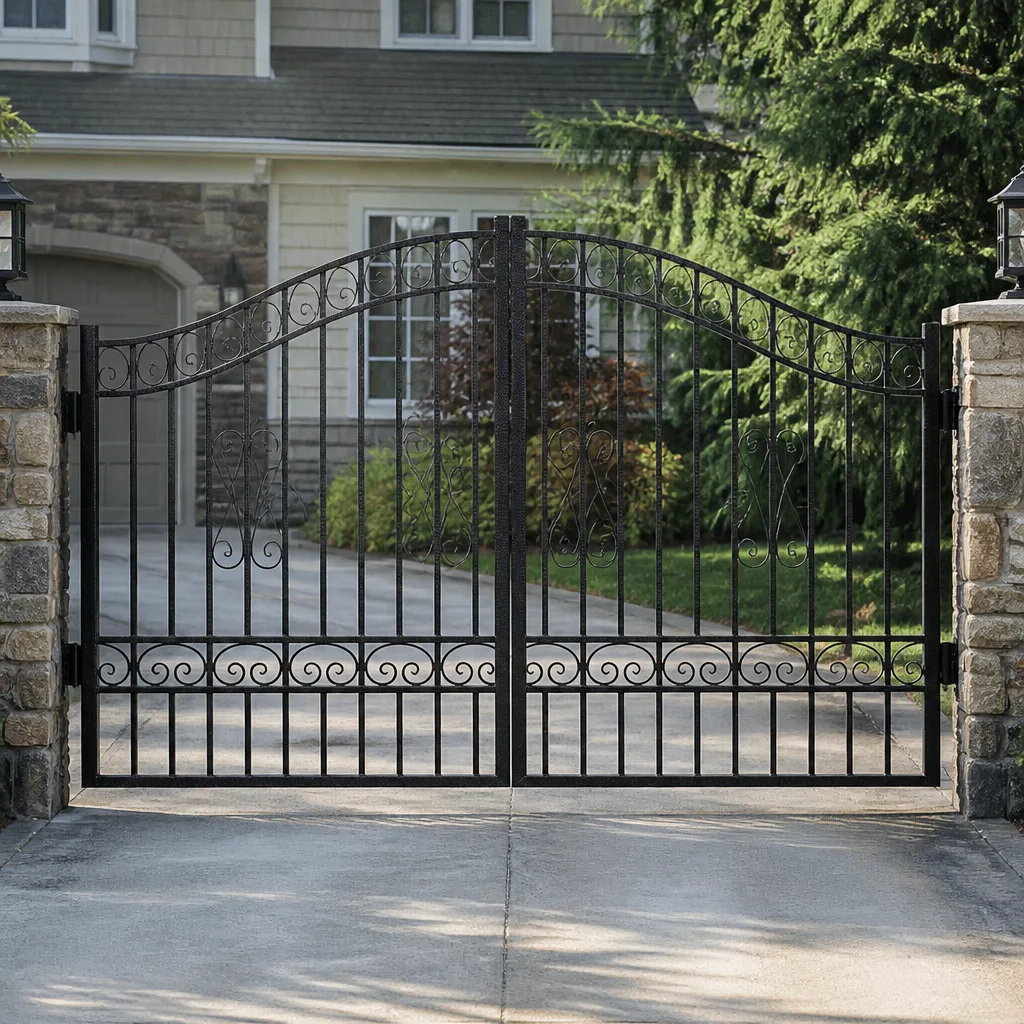 Wrought iron
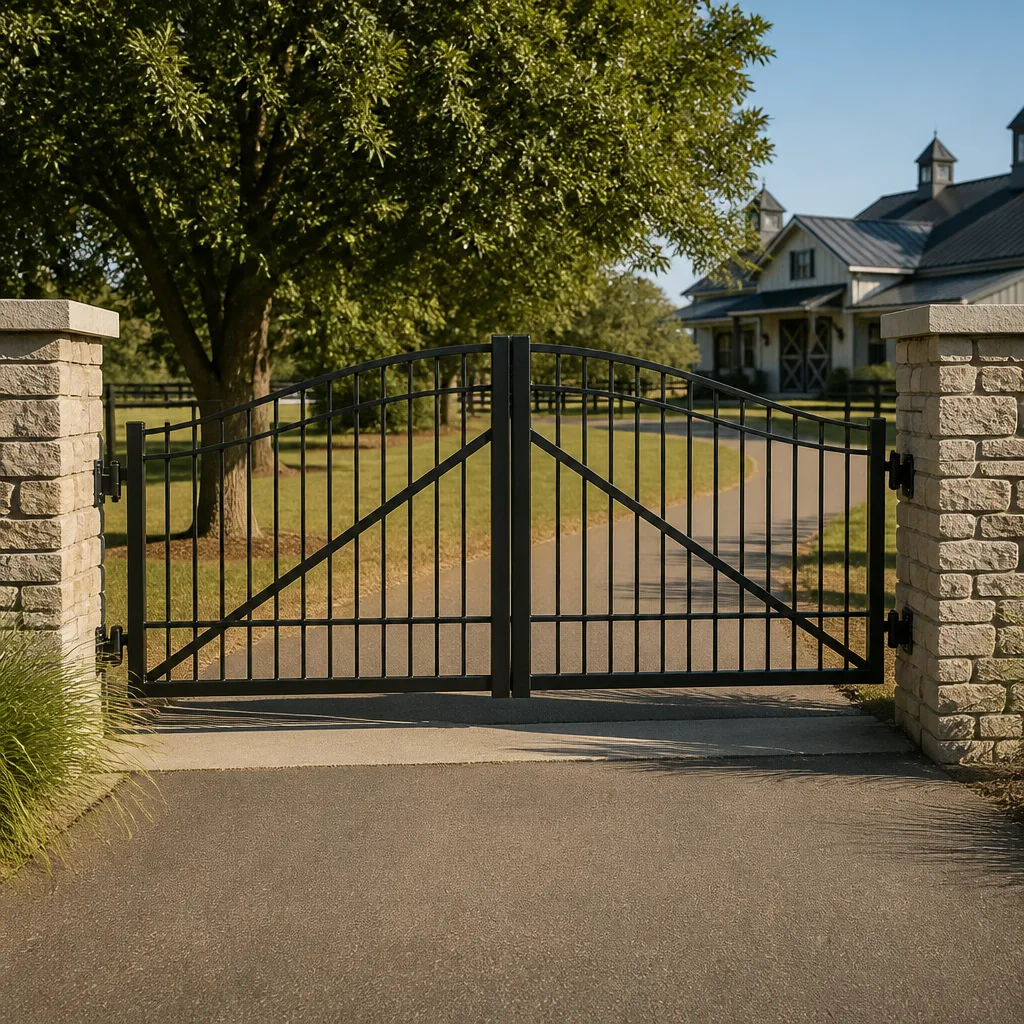 Farm & ranch
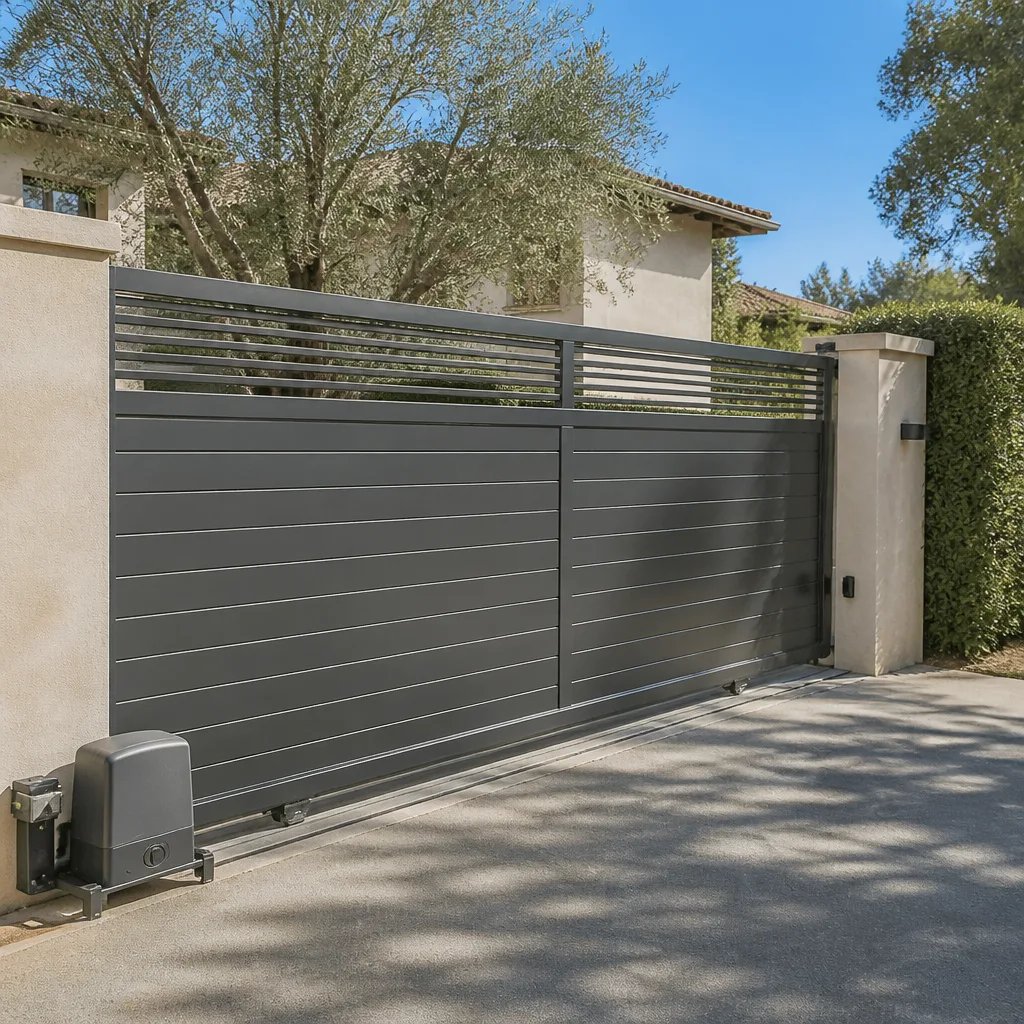 Sliding driveway gates
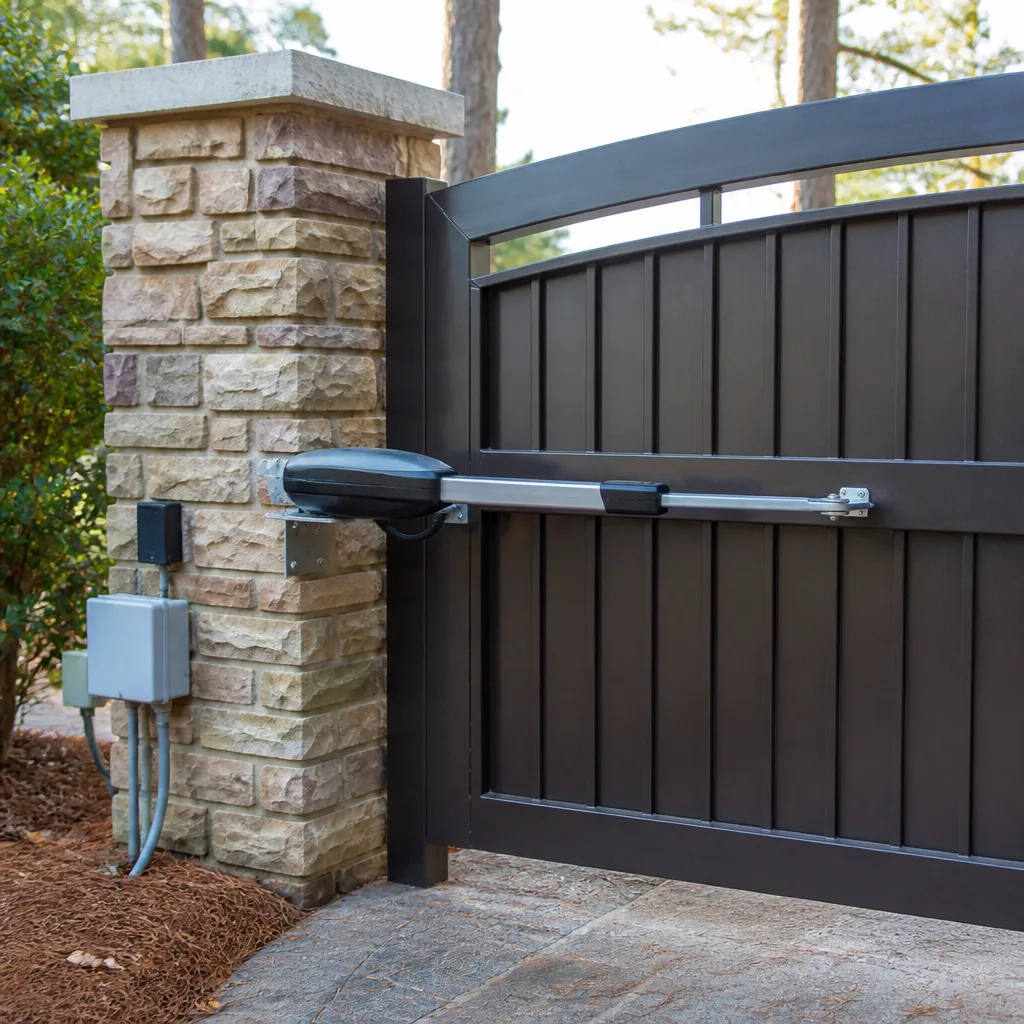 LiftMaster operators
Free on-site gate assessment - hinges, posts, and your LiftMaster or Nice gate operator checked before anything is quoted
The assessment is free and the quote is the invoice.
Get your free estimateSeasonal Gate Repair Care for Hollywood: Year-Round Homeowner’s Guide
Most gate maintenance calendars are written for places with snow, road salt, and frozen ground. Hollywood doesn’t work that way. Here, the real threats are salt spray off the Atlantic, eight months of humidity, and a dry window so short that most homeowners blink and miss it. This guide is built around Hollywood’s actual weather pattern, the two seasons that each punish gates in opposite ways, and the 90-day transition window that separates them. You’ll learn what to inspect in November, what to prep in May, and the specific components we see fail most often in each stretch of the year.
Quick Answer
Seasonal gate care in Hollywood comes down to two maintenance windows: dry-season work between November and April (corrosion touch-ups, hinge lubrication, operator calibration) and wet-season prep between May and October (storm-proofing, drainage checks, battery backup testing). Homeowners who act during the 90-day transition period after hurricane season, typically November through January, spend significantly less on our Gate Repair services than those who wait for visible failure.
Styles & brands we work with
Table of Contents
- Why Hollywood Has Two Seasons, Not Four
- The 90-Day Transition Window Most Homeowners Miss
- Dry-Season Gate Maintenance (November – April)
- Wet-Season Gate Prep (May – October)
- Salt Spray: The Hidden Corrosion Problem in Hollywood
- Which Gate Components Fail in Which Season
- The 12-Month Hollywood Gate Service Calendar
- Common Mistakes to Avoid
- When to Call a Professional
- Frequently Asked Questions
Why Hollywood Has Two Seasons, Not Four
Hollywood, Florida sits on a coastal plain where the Atlantic Ocean regulates temperature year-round. The result is not spring, summer, fall, and winter. It’s a wet season from roughly May through October and a dry season from November through April. Each of those seasons applies a different kind of pressure to your gate system, and understanding the difference is the foundation of smart maintenance.
During the wet season, Hollywood receives the bulk of its 60-plus inches of annual rainfall. Humidity runs consistently above 70 percent, sometimes spiking past 85 percent for weeks at a time. That airborne moisture penetrates control boards, corrodes electrical connections, and accelerates the chemical reaction already started by salt spray from the ocean. For automated gates, the wet season is when circuit boards fail, sensors short, and ground loops act erratically.
The dry season is not dry by desert standards. It’s simply less wet. Humidity drops, afternoon thunderstorms go quiet, and for a few months, metal surfaces stay dry long enough to accept paint, primer, and touch-up coatings. This is the only window in Hollywood where corrosion stop-work is genuinely viable. Miss it and you wait another year.
We work on gates across Hollywood, from the older homes in Hollywood Lakes to gated communities off Sheridan Street and newer developments west of I-95. The failure patterns are consistent. Gates near the coast, within two or three miles of the beach, corrode faster than gates a few miles inland. But even inland gates deal with humidity that a Chicago or Dallas gate never sees.
The 90-Day Transition Window Most Homeowners Miss
The 90-day window between the end of hurricane season, November 30, and the second half of February is the highest-value maintenance period in Hollywood. Most homeowners miss it entirely because their gates are still working fine. That’s exactly the point. This window is for preventing the spring and summer failures, not reacting to them.
Here’s why timing matters. From November through January, Hollywood’s average relative humidity sits at its lowest point of the year. Rain falls less often. Surfaces dry fully. If your gate’s steel posts or hinges need welding, this is the stretch where welds cure clean without flash rust forming before the paint goes on. If your wrought iron or aluminum gate needs a rust-inhibiting primer and coat, the dry season is when that coating bonds properly. Schedule these tasks in June and you’re painting onto a surface that’s damp before the roller even touches it.
The transition window also falls after hurricane season, which means any storm stress from the previous months is visible. A gate that shifted slightly during September winds, a hinge that loosened, an operator that got splashed with stormwater runoff. All of it is identifiable in November. Fixing it then costs less than waiting for the same worn part to snap in April, when everyone in Hollywood suddenly notices their gate groaning at once. For a deeper look at timing your maintenance right, see The Complete Gate Repair Guide for Hollywood Homeowners.
At Carter Gate Repair home, our Hollywood service schedule always fills quickly in November and January because that’s when seriously proactive clients book their annual gate tune-ups. If you want to join that group, put the transition window on your calendar every year.
Dry-Season Gate Maintenance (November – April)
The dry season is for repair, restoration, and correction. Lower humidity means slower corrosion, which buys you time to address metal issues properly. It’s also the time to calibrate and adjust your gate’s mechanical system after summer storms pushed everything slightly out of alignment.
What to Address During the Dry Season
- Rust and corrosion touch-ups. Inspect gate posts, hinges, pickets, and the bottom rail for rust spots, especially anywhere water pools or metal meets metal. Wire-brush the affected area, apply a rust-inhibiting primer, then repaint. This is the only season in Hollywood where that paint cures properly.
- Gate sag and alignment. Hinges stretch under the weight of a swinging gate, especially after wet-season expansion and contraction. If your gate drags on the ground or the latch no longer lines up, dry-season adjustment works best because the metal isn’t swollen with absorbed moisture.
- Operator calibration. Swing-arm and slide operators work differently when the gate itself is heavy with rust or debris. November is a good time to test force settings and limit switches. A LiftMaster or FAAC operator that ran fine in October may need re-calibration after the gate shifts during summer storms.
- Track and roller inspection. On sliding gates, dry-season dust mixes with residual grease and creates a paste that wears roller bearings. Clean the track, inspect the rollers, and re-grease with a dry-film lubricant that won’t attract wet-season grit.
- Keypad and intercom testing. The dry season is when keypads get fried by afternoon UV and salt film builds up on key contacts. Clean them, check the weather seals, and replace absent covers.
One note from our Hollywood service calls: if you repaint or touch-up a gate yourself, do not paint over the hinges without first removing and lubricating them. A painted hinge is a frozen hinge. We’ve seen more than one homeowner turn a simple lubrication job into a full hinge replacement because paint seeped into the pin channel.
Wet-Season Gate Prep (May – October)
The wet season in Hollywood is not a passive waiting period. It’s a testing ground. Eight months of daily heat, frequent downpours, and hurricane-related wind events will expose every weak point in your gate system. Preparation means hardening the system before the first named storm, not after the power goes out.
Wet-Season Prep Checklist
- Test the battery backup. Automated operators with DC motors and battery backup should be tested every May. Unplug or switch off AC power and verify the gate opens and closes normally on battery power. If it doesn’t, replace the battery cells before hurricane season peaks in August and September. This applies to most Mighty Mule and newer LiftMaster residential operators.
- Inspect and seal operator enclosures. Walk the perimeter of the operator housing. Look for cracked seals, missing screws, or gaps where cable enters the case. Reseal as needed. A single unsealed knock-out can let in enough storm-driven rain to short a control board.
- Clear drainage around gate posts. Slide gates and swing gates mounted near low spots will sit in standing water after a Hollywood thunderstorm. Check that grade slopes away from both gate posts. Add soil or gravel where water pools. A post sitting in water for weeks corrodes from the bottom up, and the damage is often invisible until the gate starts leaning.
- Check the ground loop and photoelectric sensors. Wet soil changes how loop detectors behave. A loop that worked fine during the dry season may fail to detect during heavy rain. Watch for intermittent gate closures or a gate that reverse for no reason. These are classic signs of a ground loop reacting to moisture, not a broken motor.
- Remove vegetation around the gate path. Fast-growing coastal vegetation, sea grape, and vine growth all expand quickly in the wet season. Anything that blocks the photoelectric safety beam causes the gate to refuse to close. Trim it back before it becomes a problem.
If a storm does knock out power at your Hollywood home, remember that most automated operators can be disconnected from the operator and operated manually. Pull the release handle, swing or slide the gate by hand, and then re-engage when power returns. If the gate feels unusually heavy when disconnected, the problem is mechanical, not electrical, and warrants a service call before the next storm.
Salt Spray: The Hidden Corrosion Problem in Hollywood
Hollywood sits directly on the Atlantic coast. The ocean is not a seasonal visitor. It’s a constant presence, and the salt it throws into the air lands on your gate every single day. In the dry season, salt particles sit on metal and slowly draw moisture from the air. In the wet season, that salt dissolves and accelerates electrochemical corrosion. The result is that Hollywood gates corrode faster than gates a few miles inland, even when they look identical.
The right time to inspect for cumulative salt-spray damage is spring, specifically March and early April. That’s when the dry season has done its work and before the heaviest summer humidity locks new corrosion in. Here’s what to look for:
- White, chalky residue on aluminum or galvanized surfaces. This is early-stage oxidation. It can be cleaned and coated before it turns into pitting.
- Bubbling paint at the base of steel posts or on the bottom rail. That means the steel underneath is rusting and pushing the coating outward.
- Rust streaks running down from bolt heads, hinge screws, or welded joints. These are the first places salt-water corrosion appears because the protective coating was broken during installation.
- Green or blue corrosion on copper wiring or electrical terminals inside the operator enclosure. Salt film conducts electricity and creates bridges that short low-voltage circuits.
If you live east of US-1, within a mile or two of Hollywood Beach, your gate is in the highest-exposure zone. Gates here may need salt-washing and protective recoating every two years, not every five. Washing the gate with fresh water monthly during the dry season can significantly slow chloride buildup. Just avoid power washing near the operator or any electrical connections. Low pressure and a soft brush are enough.
For electric gate systems, salt exposure often finds its way into the operator board. We’ve opened control enclosures in Hollywood Lakes where the circuit boards look like they’ve been through a car wash. If your electric gate repair in Hollywood involves intermittent sensor faults, a salt-corroded connection is one of the first things we check.
Which Gate Components Fail in Which Season
Different seasons break different parts. Knowing which components fail when helps you spot problems early, before they take down the whole system.
Dry-Season Failure Patterns (November – April)
- Battery backups. Heat shortens battery life, and Hollywood’s dry season is still hot. Batteries that sat through a hot summer often fail the first time they’re actually called on, which is during a dry-season power flicker or the opening thunderstorm of May.
- Keypads and external controls. Intense UV exposure plus salt film degrades keypad buttons and display screens. Failed keypads are one of the most common Hollywood dry-season service calls.
- Dry bearings and squealing hinges. Lower humidity means less natural lubrication. Hinges and wheels that got by during the wet season start to squeal, grind, or bind.
Wet-Season Failure Patterns (May – October)
- Ground loops and photoelectric sensors. Saturated soil changes the inductive signature of underground loop detectors. Gates start to open or close randomly. Sensors get knocked or covered by wind-blown vegetation.
- Control-board shorts. Moisture ingress through failed enclosure seals leads to fried boards. This is the most expensive common repair linked directly to wet-season weather.
- Chain and sprocket corrosion. Slide-gate chains left dry through a single Hollywood rainy season develop rust that accelerates sprocket wear and can break within two years.
- Post shifting. Persistent rain saturates soil around poorly drained gate posts. Soft soil allows the post to tip, and a tipped post changes how the entire gate hangs and latches.
We work on gates equipped with LiftMaster, FAAC, BFT, and Mighty Mule operators, and the failure patterns are consistent across brands. If you’re weighing options for new equipment, see Choosing the Right Gate Repair Brand: A Buyer’s Guide for Hollywood. It’s rarely the motor that gives up first. It’s the supporting electrical system, the mechanical hardware, or the enclosure that houses the electronics. That’s why a seasonal checklist beats an emergency phone call every time.
The 12-Month Hollywood Gate Service Calendar
This calendar follows Hollywood’s actual climate, not a generic four-season template. Each month includes one task that takes less than an hour for most homeowners.
January
Full gate inspection. Walk the entire gate path, open and close the gate manually and automatically, and listen for anything new. January is the anchor month for catching winter dry-season issues.
February
Lubricate hinges, rollers, and the chain (if applicable). Use a lightweight machine oil on hinge pins and a dry-film spray on drive chains. Do not use thick grease on slide-gate tracks; it just collects sand.
March
Salt-spray inspection. Look for chalky residue, bubbling paint, and rust streaks. Wash the gate with fresh water and mild soap, and schedule any touch-up painting for the next 60 days.
April
Touch-up paint and rust repair. Wire-brush rust spots, prime, and repaint. April is the last reliably dry month in Hollywood before the wet season begins.
May
Battery backup test. Disconnect AC power and verify the gate operates on battery. Replace weak cells. Also clear drainage paths around both gate posts.
June
Vegetation trim. Cut back anything near the gate path or photoelectric sensors. Fast-growing plants in the wet season will block a safety beam within weeks.
July
Operator enclosure inspection. Check seals, screws, and cable entry points. Reseal any cracks. A few dollars of sealant in July prevents a several-hundred-dollar board replacement in September.
August
Storm prep. Verify the manual release handle works. Charge or test the battery backup again. Confirm the gate’s storm mode, if your operator has one, is set correctly. For BFT and FAAC commercial operators, storm mode may be a configurable setting.
September
Peak hurricane month. Do not perform major work. Monitor the gate after any significant wind event and check that posts have not shifted.
October
Post-storm inspection. Wet season is ending. Check for any water damage, corrosion, or mechanical issues that developed through the summer. Note them for the upcoming dry season.
November
Begin dry-season corrections. Address gate sag, recalibrate operators, and deep-clean the track and wheels. This is the first month of the transition window.
December
Professional tune-up if you haven’t done one in two years. A gate repair in Hollywood tune-up should include force-setting checks, limit-switch verification, hardware tightening, and a board-level inspection. December is an ideal month because Hollywood Gate specialists’ calendars still have room before the January rush.
Common Mistakes to Avoid
- Waiting until the gate won’t open to call for service. By the time a gate fails completely, the root cause has usually been developing for months. Seasonal maintenance catches it early. Emergency repairs cost more and mean an unsecured driveway in the meantime.
- Painting over rust without removing it. Rust continues spreading underneath a fresh coat of paint. You’ve bought yourself maybe six months of nicer appearance and doubled the eventual repair area. Wire-brush first, then prime, then paint.
- Ignoring the battery backup because the gate works fine on AC power. A battery backup that’s never tested will fail when you need it, which is precisely during a storm-related outage. Test it twice a year, in May and August.
- Power washing the gate or the operator enclosure. High-pressure water forces moisture past seals, into bearings, and behind connectors. It’s the fastest way to create the exact electrical failures you’re trying to prevent. Low pressure only.
- Letting landscaping grow into the safety beam. When the photoelectric sensor is blocked, the gate refuses to close. Many Hollywood homeowners assume the gate is broken and pay for a service visit when the fix is a hedge trimmer.
- Assuming all gate companies know all gate brands. A garage door company that occasionally handles a gate may not have bench experience with your specific operator. We’ve followed behind generalists who diagnosed a BFT control board as failed when the actual issue was a misaligned limit switch. If your gate installation in Hollywood came with a specific brand, find a gate specialist who knows that brand’s failure modes, not just its marketing brochure.
When to Call a Professional
Some gate issues are safe and sensible for a homeowner to handle: cleaning, light lubrication, vegetation trimming, visual inspections. Others need a trained technician. Call a professional when the gate structure itself shifts, when the auto-reverse function misbehaves, when the operator smells of burnt wiring, or when the gate works intermittently despite clean hardware. Also call if the operator is more than 10 years old and hasn’t been inspected in the past two years. High-cycle operators in commercial settings need even more frequent board-level checks.
Our team at Carter Gate Repair specializes in gates exclusively. We work on nine operator brands, every repair falls within the gate category, and we don’t sell replacements you don’t need. If you’re in Hollywood and something on this list is beyond your comfort level, Carter Gate Repair offers free estimates in Hollywood, call (866) 665-5592.
Frequently Asked Questions
A basic seasonal gate tune-up in Hollywood typically runs between $125 and $250 depending on gate size, operator type, and whether any adjustments are needed. Repairs found during maintenance are quoted separately before any work begins. Call (866) 665-5592 for an exact quote for your gate.
Seasonal maintenance is scheduled work, not emergency dispatch. Most Hollywood homeowners book maintenance one to three days in advance, and scheduling is easiest during the dry season from November through April. We’ll give you a written price before the visit so there are no surprises.
Yes, and it’s more aggressive near the coast. Homes east of US-1 and within a few miles of Hollywood Beach see corroded hinges, bubbling paint, and electrical terminal damage far sooner than homes further inland. Monthly fresh-water washing during the dry season and annual spring inspection help, but some coastal gates still need recoating every two years.
A full gate tune-up includes hinge and roller lubrication, chain tension adjustment (for slide gates), operator force-setting verification, limit-switch calibration, battery backup testing, photo-sensor alignment, and a visual check of all wiring connections. The price is agreed before any work starts, so you won’t see a surprise line item at the end.
Yes. As gate specialists, our work covers the entire system, from the control board inside the operator to the hinge at the far end of the gate. That includes low-voltage wiring, loop detectors, safety edges, keypads, and battery backup wiring. If your gate has an electrical component, we can diagnose and service it.
Replace the gate when the structural steel is so corroded that repairs would be temporary, when the post has shifted and cracked the foundation, or when the operator is so obsolete that replacement parts are no longer manufactured. Those are genuine replacement scenarios. Most Hollywood gate problems, however, are repairable. We’ll tell you straight if repair doesn’t make sense. Call (866) 665-5592 to schedule an inspection.
The Bottom Line
Hollywood’s two seasons each threaten gate systems in their own way. The wet season attacks electronics, drainage, and chain hardware. The dry season exposes rust, sag, and alignment drift. The 90-day transition window between late November and February is your best opportunity to correct both before they become expensive. Build these tasks into your calendar, act before the gate fails, and explore more guides & resources when you need a specialist, you know who to call. Gates are all we do.
Written by the team at Carter Gate Repair, serving Hollywood since 2015.
See the difference
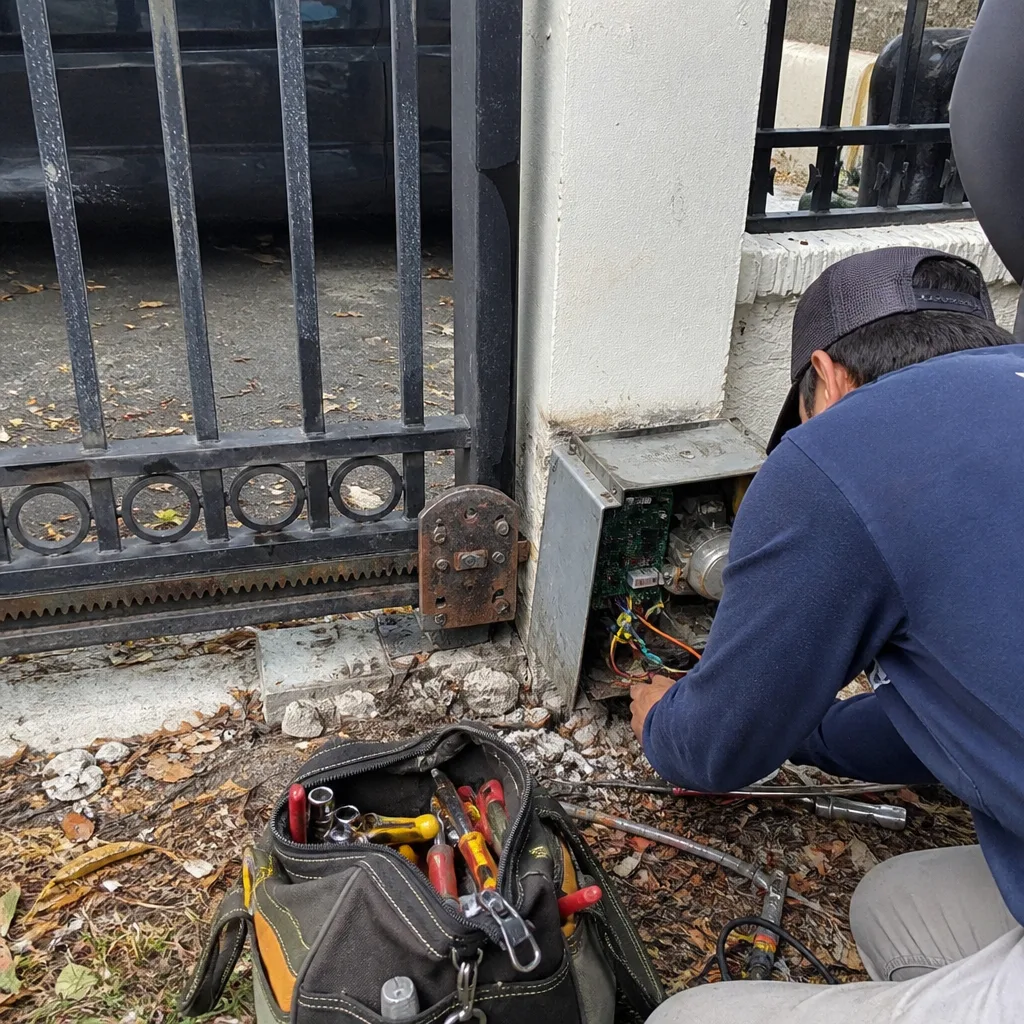 Before
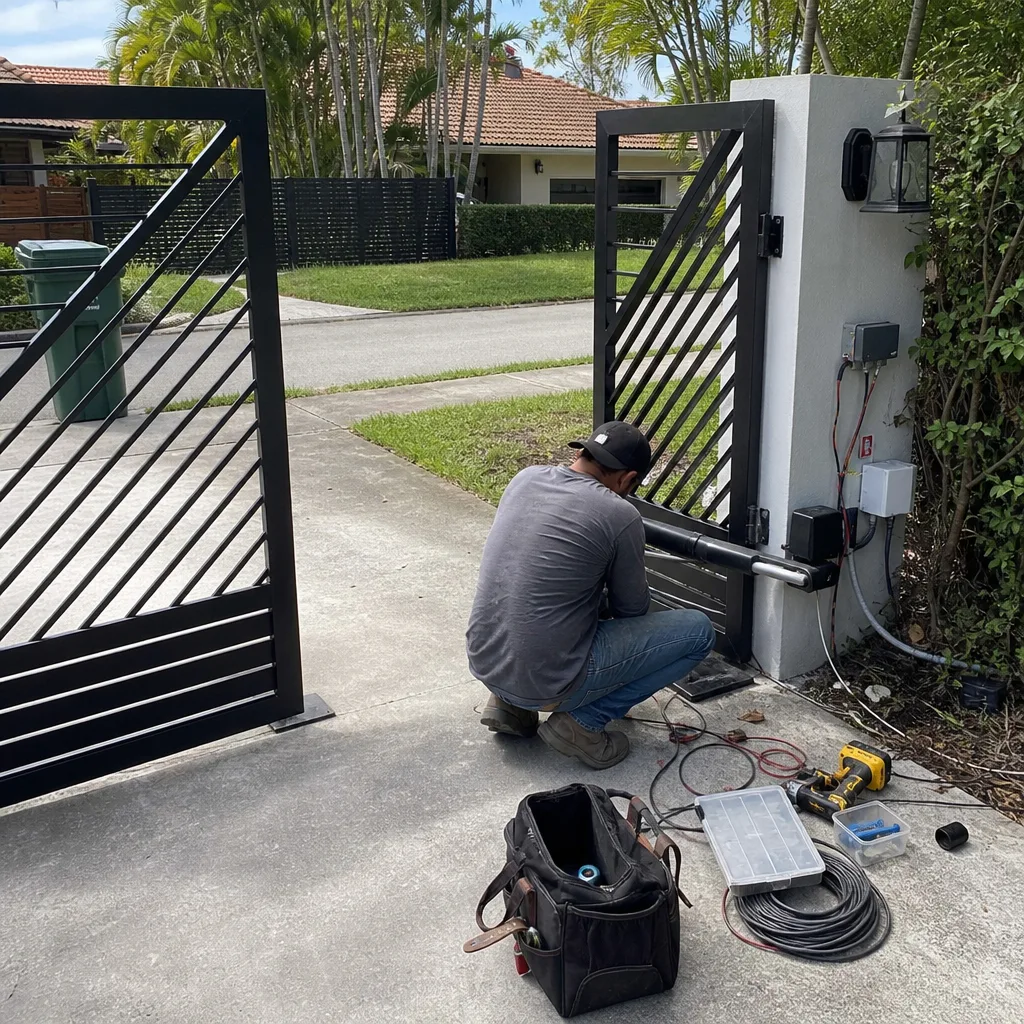 After
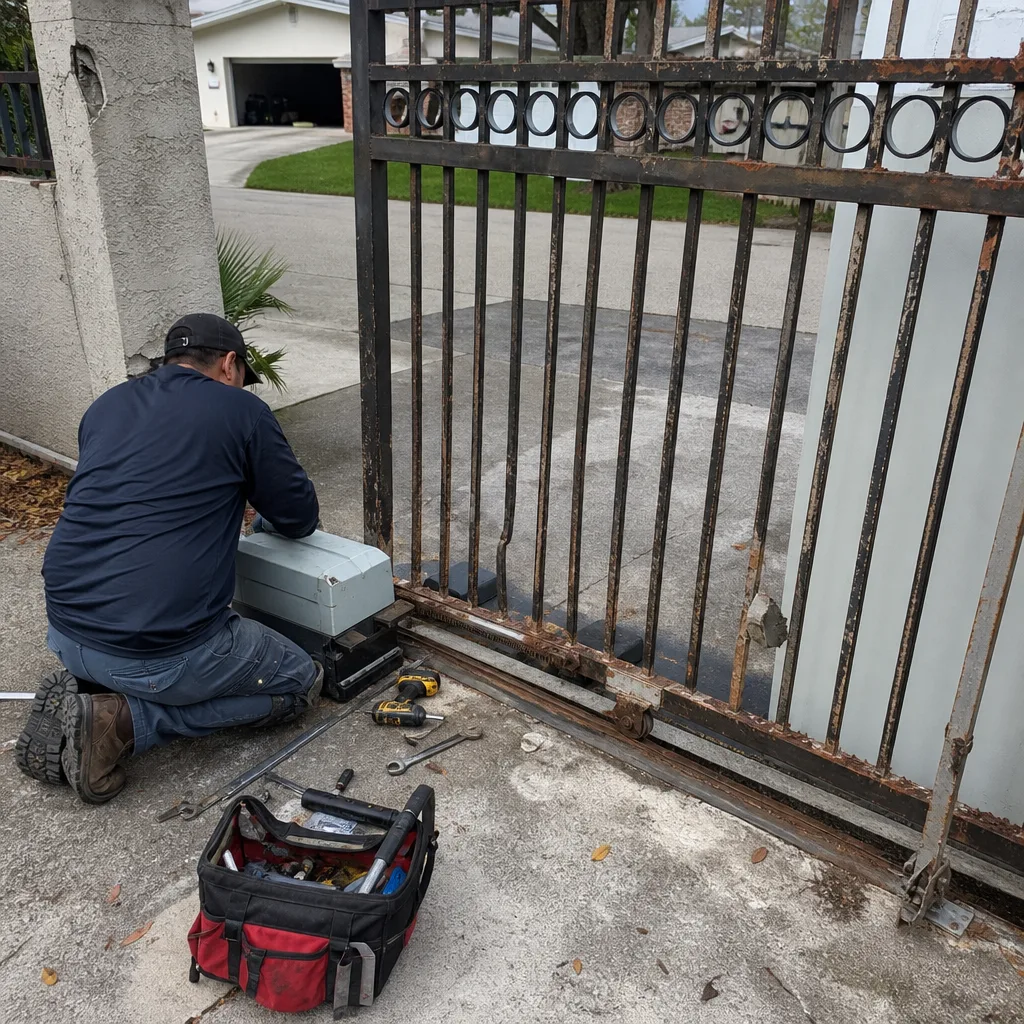 Before
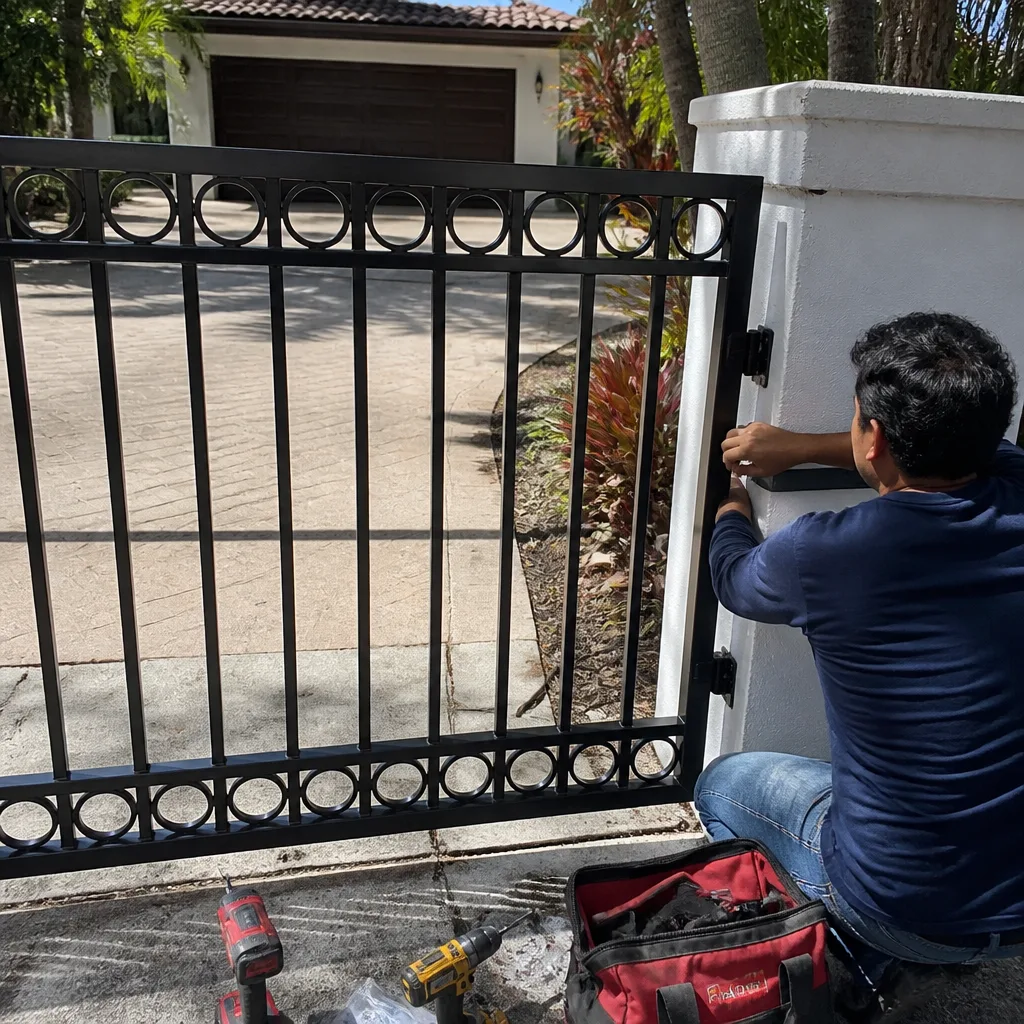 After
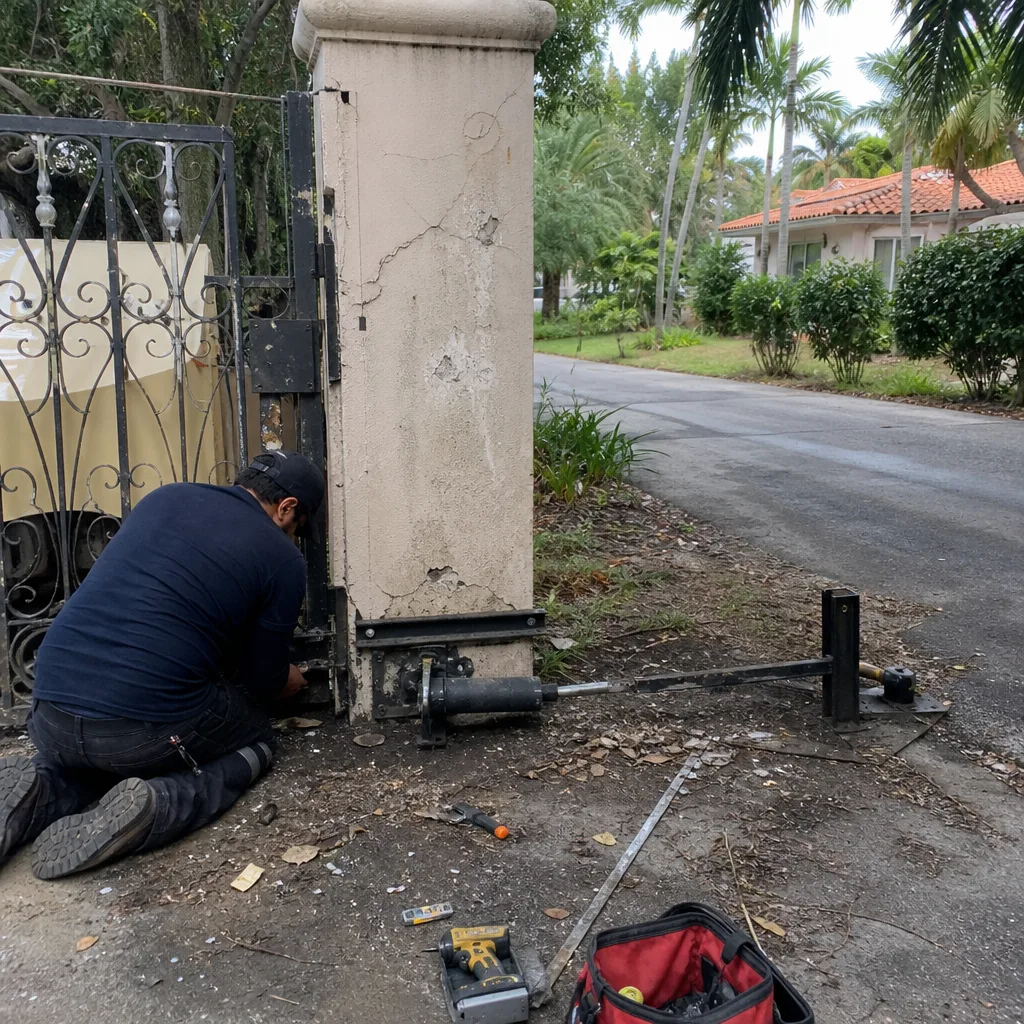 Before
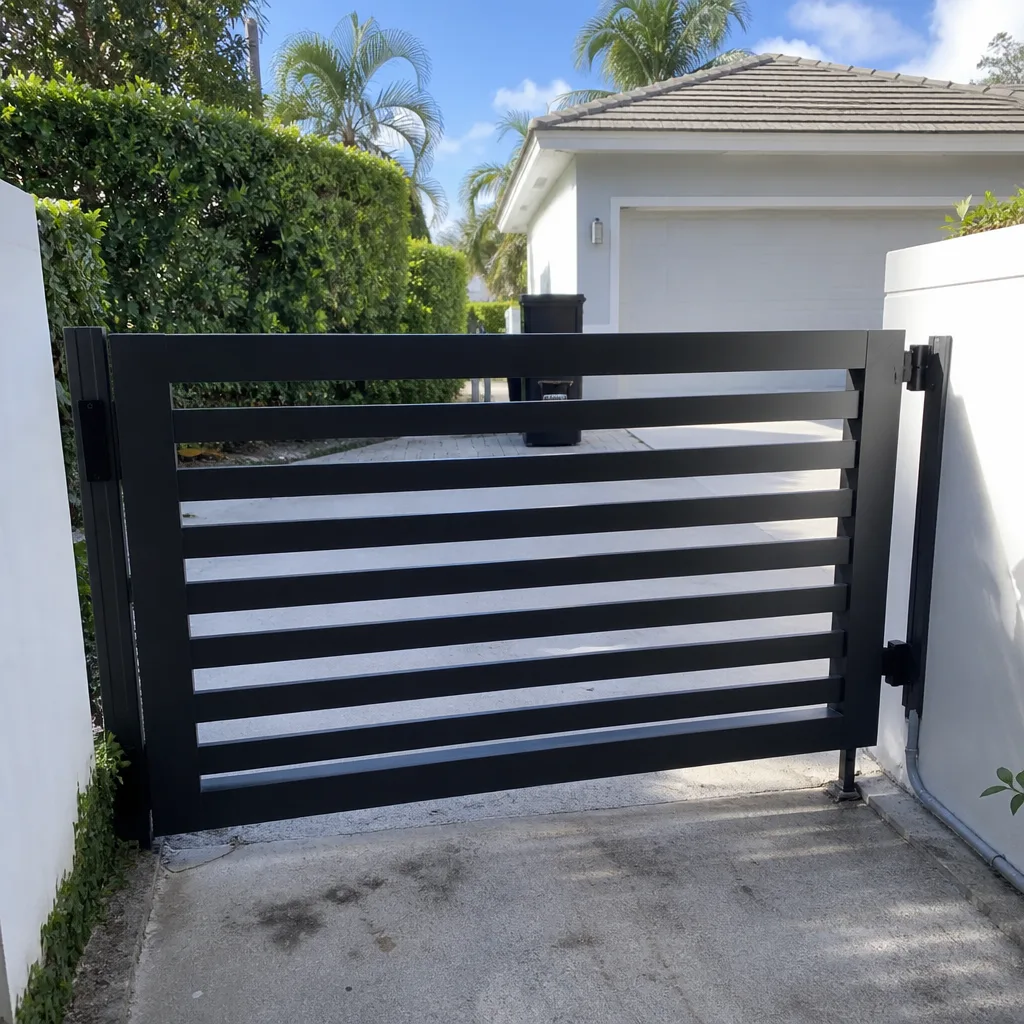 After