Last updated October 31, 2026
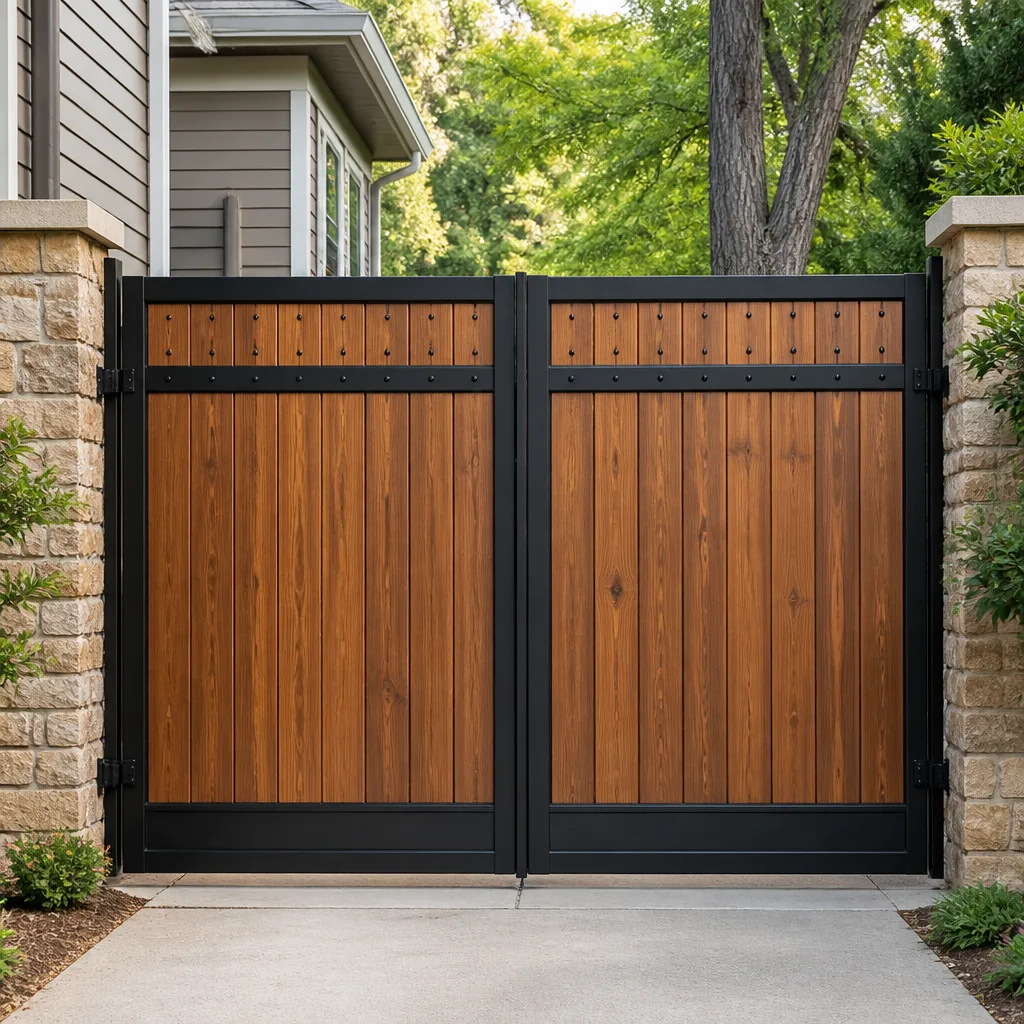 Wood & steel frame
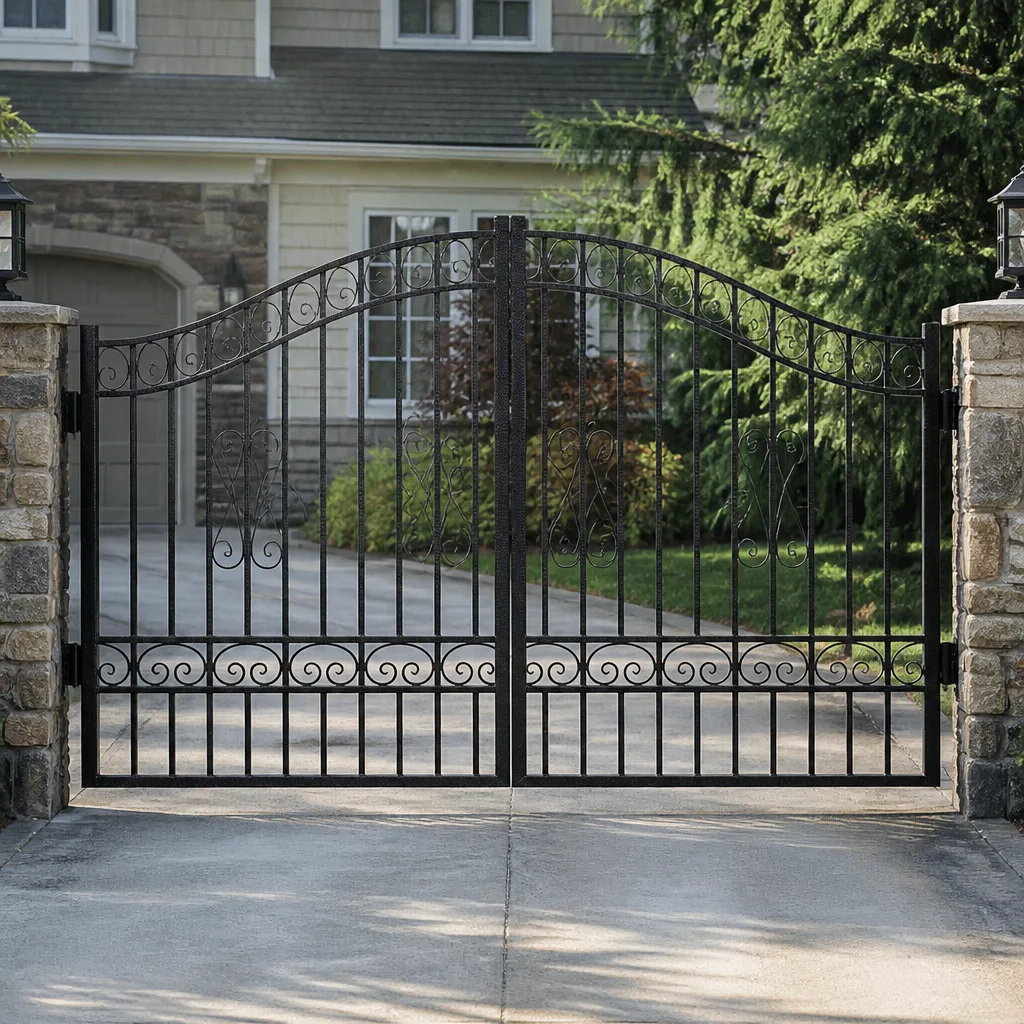 Wrought iron
 Farm & ranch
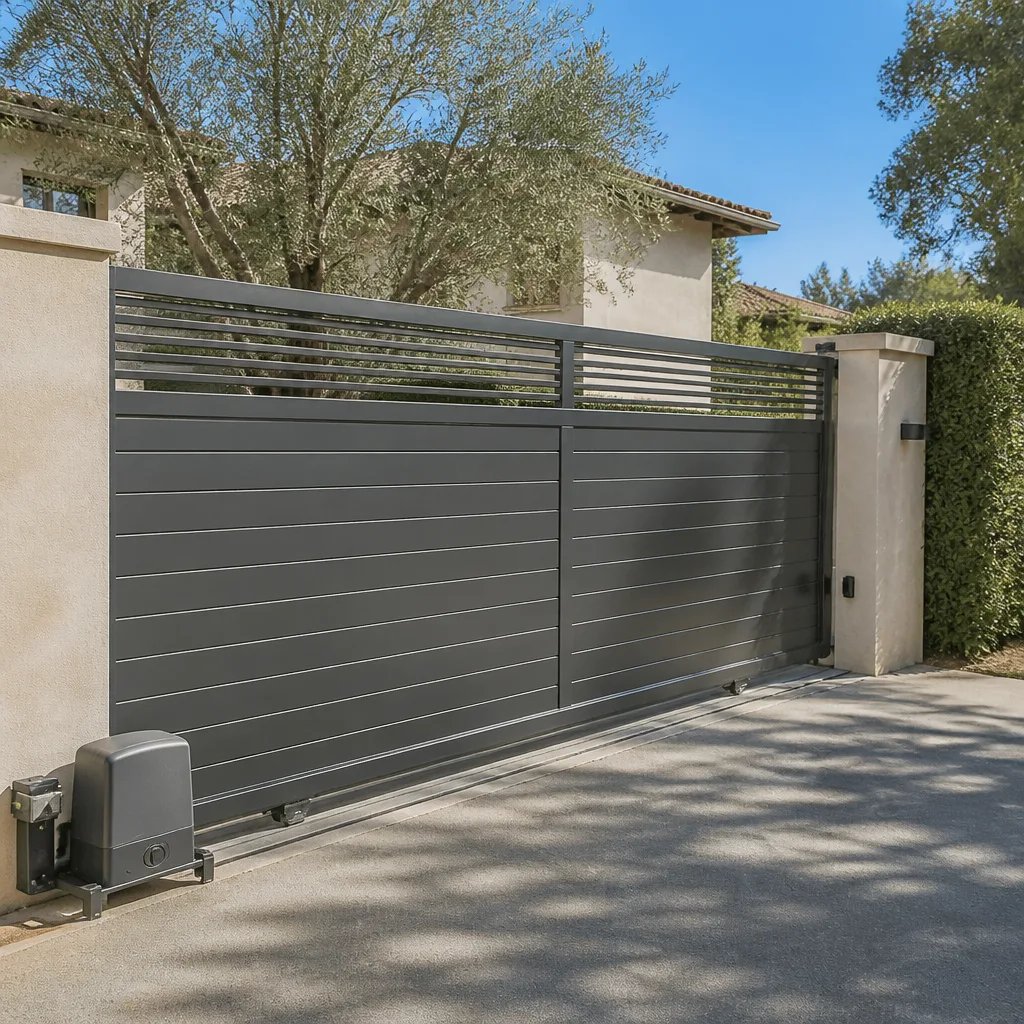 Sliding driveway gates
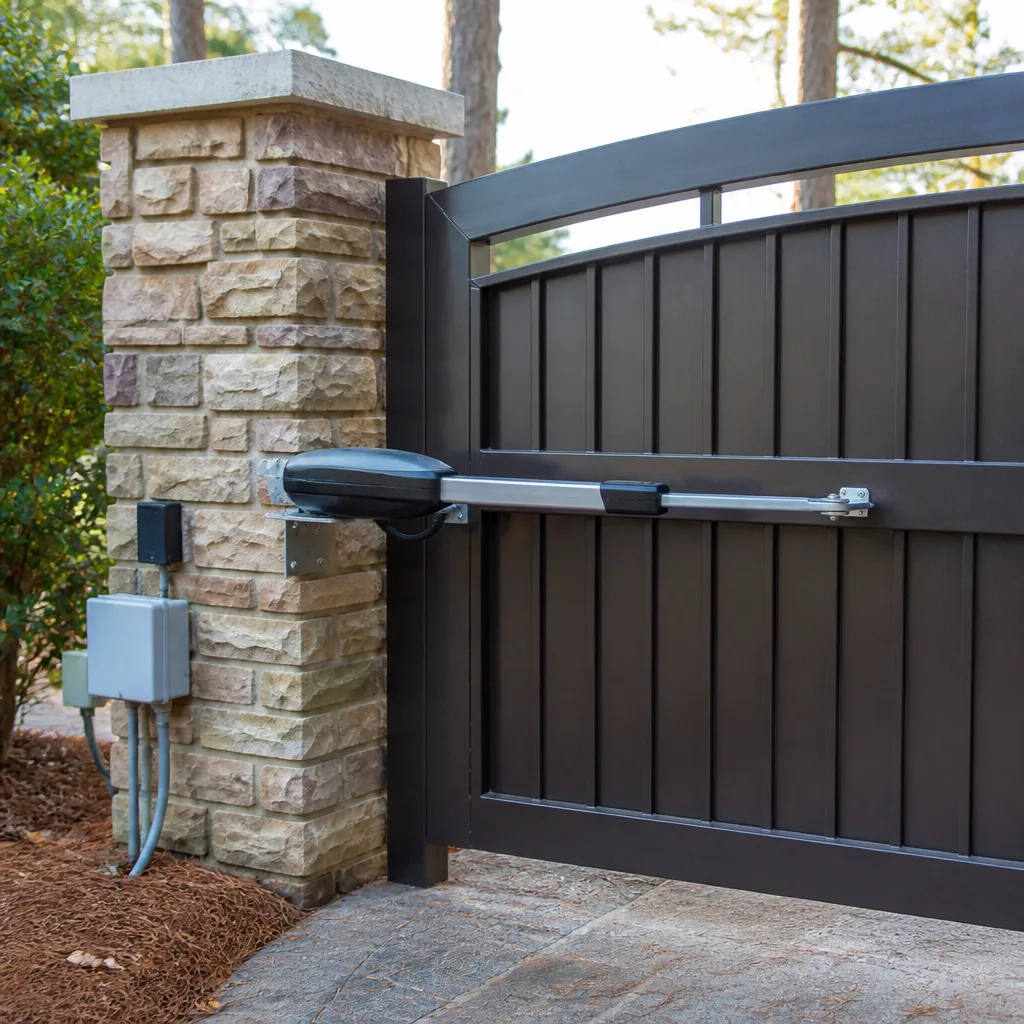 LiftMaster operators
Free on-site gate assessment - hinges, posts, and your LiftMaster or Nice gate operator checked before anything is quoted
The assessment is free and the quote is the invoice.
Get your free estimateGate Repair Warning Signs: A Hollywood Homeowner’s Reference Guide
Most Hollywood gate failures don’t start with a dramatic breakdown. They start with a two-second hesitation, a faint grinding sound, or a gate that sits half an inch lower than it did last month. Homeowners notice these things, shrug, and move on, until the morning the gate refuses to open at all and the car is trapped in the driveway. This guide teaches you to read the warning signs your gate is already giving you. We’ve spent thousands of hours diagnosing automated gates across Hollywood, from Emerald Hills to Hollywood Lakes, and the pattern is consistent: gates that get attention at the first sign of trouble are almost always repairable. Gates that get ignored until they stop moving usually need an operator replacement. The difference is often six to eight weeks and a few thousand dollars.
Quick Answer
Gate repair warning signs in Hollywood fall into four categories: sound (grinding, clicking, skipping), movement (hesitation, partial opening, reversing mid-cycle), visual (sagging hinges, cracked welds, rust at track joints), and electrical (intermittent response, error codes, tripped breakers). Any of these signals means the gate is working harder than it should. In Hollywood’s salt air and summer heat, that extra strain converts to component failure faster than in dryer climates, so the right response is a Gate Repair service call at the first persistent symptom, not the first total failure.
Styles & brands we work with
Table of Contents
- Sound-Based Warning Signs: Grinding vs. Clicking vs. Skipping
- Visual Indicators: Hinges, Welds, and Tracks
- Behavioral Patterns: Hesitation, Partial Opening, and Mid-Cycle Reversals
- Reading Your Gate’s Error Codes (and What to Do Without One)
- Hollywood-Specific Factors: Salt Air, Heat, and Storm Season
- Scheduled Service vs. Same-Day Urgency: How to Tell
- Common Mistakes to Avoid
- When to Call a Professional
- Frequently Asked Questions
Sound-Based Warning Signs: Grinding vs. Clicking vs. Skipping
A healthy automated gate makes a smooth, consistent hum. The motor engages, the chain or belt moves, the gate travels its track. Any change in that sound is a clue worth taking seriously. Different failure modes produce different sounds, and learning to distinguish them tells you whether you’re looking at a $180 hinge replacement or a $1,400 operator swap.
Grinding is the sound of metal on metal where there should be lubrication or clearance. When we hear grinding from a gate in Hollywood, we look first at the hinge bearings and the wheel trucks on the track. Coastal humidity accelerates corrosion on these parts, especially on older steel gates in neighborhoods like Hollywood Hills or near the Intracoastal. Grinding that gets louder over a week or two almost always means a bearing is failing. Caught early, that’s a bearing replacement. Ignored, the bearing seizes, the motor strains against the resistance, and the operator burns out. The noise is early warning. The silence after the noise stops is the actual failure.
Clicking is a different story. A rapid clicking when you press the remote or the keypad usually points to electrical trouble rather than mechanical trouble. On FAAC and BFT operators, a click with no movement often means the control board is receiving the signal but the capacitor or start relay isn’t delivering power to the motor. On Linear and Viking systems, the same click can indicate a low battery in the backup system or a limit switch that’s out of alignment. The fix might be a capacitor, a relay, or a simple reset, but the diagnostic matters: clicking is an electrical signal, not a mechanical one, and throwing grease at it won’t help.
Skipping sounds like the gate jumps forward in short bursts instead of moving smoothly. On chain-drive gates, skipping means the chain has stretched and is losing contact with the sprocket. On belt-drive systems, the belt is slipping. Hollywood’s heat cycles make chain stretch worse, especially on gates that face full afternoon sun with no shade. Skipping will eventually throw the chain entirely, and then the gate won’t move under power at all. Re-tensioning a chain costs significantly less than replacing an operator that overheated while fighting a slipping chain.
Here’s the diagnostic shorthand we use, and you can use it too:
- Grinding: mechanical wear, usually hinges, bearings, or wheel trucks. Schedule service.
- Clicking: electrical fault, usually control board, capacitor, relay, or limit switch. Schedule service, but don’t run the gate repeatedly.
- Skipping: chain or belt tension failure. Schedule service before it throws the chain.
- Humming with no movement: motor is getting power but can’t move the gate, usually a seized component or a failed capacitor. Stop using the gate and call.
One more sound worth knowing: a metallic pop, followed by the gate dropping a few inches. That’s a hinge or weld failure, and it means the gate is now unsupported on at least one axis. Stop using it immediately. A gate that drops is a gate that can fall, and a falling gate in a Hollywood driveway is a serious safety issue, not a scheduling issue. More on that in the urgency section below.
Visual Indicators: Hinges, Welds, and Tracks
You don’t need a multimeter or a lift to spot half the warning signs on a gate. You need two minutes and daylight. The visual clues break into three categories: early-stage, mid-stage, and late-stage. Early-stage signs allow a scheduled repair visit. Late-stage signs mean the component is close to failure and the gate is close to being unsafe or inoperable.
Early-stage visual signs include surface rust at hinge points, minor sag (a quarter-inch drop at the free end of the gate), and uneven gaps between the gate and the fence line. These are normal for Hollywood gates over time. The salt air here, especially within a mile or two of the beach, accelerates rust on unprotected steel. We see it on gates in Hollywood Beach and North Beach more than anywhere else. A quarter-inch sag might not look like much, but it means the hinge bearings are taking uneven load, and that load gets worse every month. This is the cheapest time to fix it: new bearings, fresh lubrication, and a minor realignment.
Mid-stage signs are more obvious. Cracks forming around weld joints, especially where the gate frame meets the hinge plate. Track wheels that wobble or show flat spots. Paint bubbling from rust underneath, not just surface rust. Gates that scrape against the ground or the fence post at one specific point in their travel. These signs mean a component is actively failing, not just aging. The weld crack will grow. The wheel will seize. The scrape will get worse every cycle until something gives.
Late-stage signs are the ones where we tell homeowners to stop using the gate. A visible gap at a weld that flexes when you push on the gate. A hinge pin that has walked partway out of the barrel. A track that’s visibly bent or a wheel that’s left the track entirely. These aren’t repairs anymore; they’re safety hazards. A gate that weighs 300 to 600 pounds, once it’s off its track or off a hinge, can fall hard and fast. In Hollywood, where driveways often slope and gates sit on elevated concrete pads, a falling gate travels farther than homeowners expect.
The visual check we recommend takes less than five minutes and works on sliding and swing gates alike:
- Stand at the free end of the gate and look across the top rail. Is it level? Any sag is a hinge or wheel issue.
- Inspect every weld you can see. Look for hairline cracks, especially where hinge plates meet the frame.
- Run your eyes along the track or the ground line. Is the gate making contact anywhere it shouldn’t?
- Push gently on the gate at the free end. Is there play, clunking, or movement that isn’t the gate sliding or swinging on its normal path?
- Check the wheels or rollers if visible. Are they round, or are they wearing flat on one side?
That’s the diagnostic baseline. If any of these checks reveals something new or different from last month, write it down and watch it. If it’s getting worse week over week, that’s a trend line pointing toward failure. For a full breakdown of what a professional inspection covers, see our Gate Repair in Hollywood page.
Behavioral Patterns: Hesitation, Partial Opening, and Mid-Cycle Reversals
The gate’s behavior is its clearest language. The way it starts, moves, stops, and responds tells you what’s happening inside the operator and along the track. Three behavioral patterns account for the majority of repair calls we get in Hollywood: hesitation on start, partial opening, and reversing mid-cycle. Each maps to a specific set of likely causes, and each has a different urgency level.
Hesitation on start is the pattern from the opening of this guide. You press the remote, and there’s a delay of one or two seconds before the gate moves. In the early stages, the delay is subtle. Homeowners tell us they thought the remote battery was dying. But here’s what’s actually happening: the operator is drawing excess current against resistance. In most cases, that resistance is mechanical, something in the gate’s movement that’s gotten stiff. A hinge that’s losing its bearing, a chain that’s over-tightened, a wheel that’s dragging on a corroded track. The operator’s motor is working harder to overcome it, and that extra draw shows up as hesitation. Left uncorrected, the motor overheats, the thermal protection trips, and the gate stops working on hot afternoons, which is exactly when Hollywood homeowners need it to work. We’ve pulled the covers off operators in Hollywood where the motor windings were visibly darkened from heat stress. That doesn’t happen overnight. It’s weeks of hesitation, ignored.
If the hesitation is accompanied by a click before the gate moves, the cause is more likely electrical: a capacitor that’s lost capacity or a relay that’s sticking. The capacitor provides the startup boost the motor needs. When it degrades, the motor starts slowly or not at all. This is a known failure point on older FAAC and BFT boards, and it’s a straightforward fix when caught before the capacitor fails completely.
Partial opening means the gate starts, travels some fraction of its normal path, and then stops and reverses or just stops. On slide gates, partial opening often traces to an obstruction on the track, a bent track section, or a limit switch that’s drifted out of adjustment. On swing gates, partial opening usually means the operator is hitting a load threshold and reversing, because the gate is binding somewhere in its arc. In Hollywood’s older neighborhoods, where concrete driveway slabs have shifted over decades, gates that were installed level are now operating off-level. The operator senses the increased load and reverses to protect itself. The gate is doing exactly what it was designed to do. The problem is the ground it’s sitting on, and the fix is realignment, not a new operator.
It goes without saying that a gate that only opens halfway in Hollywood is a functional failure. You have to get out of the car, push the gate manually, drag it back, and then deal with the operator’s safety reversal the whole time. The behavior might come and go for weeks. What’s actually happening is the limit switch is drifting further out of spec every cycle, or the binding is getting worse. It won’t self-correct.
Mid-cycle reversal is the same mechanism, but it’s the safest failure mode to have, because the operator is actively protecting something. When a gate hits an obstruction, whether that’s a kid’s bike, a landscaping stone, or its own misaligned track, the operator reverses. It’s doing its job. The question is what it thinks it’s hitting. If the track is clear and the gate still reverses, the operator is misreading the obstacle sensor or the current draw. On gates with safety edges, a damaged or oxidized edge can send false obstruction signals. On gates with force-based reversal, a misadjusted sensitivity setting can make the operator reverse under normal load. In the salt-heavy Hollywood air, wiring connections inside the operator cabinet corrode faster than inland, and false reversal signals are one of the most common symptoms. The Electric Gate Repair in Hollywood guide covers the electrical side of these symptoms in more depth.
Reading Your Gate’s Error Codes (and What to Do Without One)
Modern gate operators, almost all of them, have some form of onboard diagnostics. A blinking LED, a numeric code on a small display, or a sequence of beeps. These codes are the operator telling you what’s wrong in its own limited vocabulary. The trick is knowing where to look and what to do with what you find.
If your operator has a display or LED:
- Open the control cabinet. Most errors will be visible as a blinking light or a code. Count the blinks if it’s a light, and note the pause pattern.
- Write the code down. Don’t trust your memory, especially if the operator is intermittent.
- Check the obstruction sensor path. A surprising number of error codes resolve when you clear leaves, debris, or a misaligned photo eye.
- Power-cycle the operator once. Not repeatedly. One reset. If the error clears and doesn’t return, you likely had a transient fault from a power dip or a sensor false-trigger.
- If the error returns within the hour, that’s a persistent fault, not a transient. Call with the code written down. Knowing the code before we dispatch shortens the repair time significantly.
On FAAC, BFT, Linear, and Viking operators, the codes vary by model, but the logic is consistent: blink patterns correspond to limit switch faults, obstruction faults, motor faults, or control board faults. When a Hollywood homeowner calls us with “flashing three times, pause, flashing three times” already written down, we can usually tell them over the phone what category of repair they’re looking at and whether it’s urgent. That’s the value of reading the code before you call.
If your operator has no display: you have a self-diagnosing system, it just uses the gate’s behavior instead of a screen to communicate. The sound patterns and movement patterns from the sections above are your error codes. Grinding is the mechanical fault code. Clicking is the electrical fault code. Partial opening is the load-sensing fault code. The gate is still telling you what’s wrong. You just have to know the language. That’s the entire point of this guide, and for more guides & resources you can explore our blog.
One caution: never clear error codes from a controller panel unless you know what the code means and what caused it. Clearing a fault code without addressing the underlying cause is like unplugging the check-engine light on your car. The problem is still there. It’s just communicating with you anymore.
Hollywood-Specific Factors: Salt Air, Heat, and Storm Season
Most generic gate advice online is written for somewhere else, some dry inland climate where steel rusts slowly and operators run cool. None of that advice accounts for what gates actually face in Hollywood, Florida. Three local factors change the math on wear, maintenance, and repair timing: salt air, sustained heat, and the storm-season cycle.
Salt air is the silent accelerant. Within a few miles of the Atlantic, airborne salt settles on every exposed metal surface. On painted steel gates, it finds the microscopic scratches and chips and starts working underneath the paint. On galvanized tracks and hinges, it gradually consumes the zinc coating. On electrical connections inside operator cabinets, it contributes to corrosion at the terminals, which causes exactly the false signals and intermittent failures described above. Gates in Hollywood Beach, Hollywood Lakes, and anywhere east of Federal Highway age differently than the same gate would age in west Broward. Our maintenance recommendations for coastal Hollywood gates always include a corrosion check on hinge pins, track rollers, and control-board terminals. That’s not an upsell. It’s the baseline for keeping a salt-exposed gate operational past year five.
Sustained heat is the second factor. Operators are rated for temperature ranges, and Hollywood crosses the upper threshold on a regular basis each summer. The issue isn’t the heat alone; it’s the heat combined with the resistance from worn components. A gate that moves freely doesn’t generate much motor heat, even on a 95-degree afternoon. A gate that’s binding, sagging, or running on dry bearings makes the motor draw more current, and current converts to heat inside the motor housing. The operator’s thermal protection exists to shut the gate down before the windings cook, and that’s why we hear “my gate only stops working when it’s really hot” from Hollywood homeowners every July. The motor has been overheating for weeks. The thermal cutoff is just the symptom. When we see this pattern, the fix is usually to remove the mechanical resistance, not to replace the operator, because the operator is typically still fine. It’s been protecting itself the whole time.
Storm season interacts with both factors. Before a named storm arrives, Hollywood gates get more use, often with heavier hands. During the storm, wind loads stress the gate far beyond its normal operating loads, particularly on swing gates with large surface areas and no open screening. After the storm, branches, landscape debris, and displaced pavers find their way onto tracks and into limit-switch paths. We recommend two seasonal checks for Hollywood gates: one before hurricane season starts, and one after the first significant storm of the year. The pre-season check catches wear before the gate faces storm loading. The post-storm check catches damage before it turns into a mid-cycle failure. For homeowners planning a new gate, the Gate Installation in Hollywood guide covers storm-rated design choices that reduce wind damage risk.
Scheduled Service vs. Same-Day Urgency: How to Tell
The question every Hollywood homeowner asks at some point: how bad is this, really? Can I wait a week, or do I need someone out here today? The answer comes down to two things: whether the gate still functions safely, and whether continued use is making the problem worse. For a detailed walkthrough on choosing the right professional, see our guide on How to Hire a Gate Repair Contractor in Hollywood: A Step-by-Step Guide.
Scheduled service is appropriate when the gate still opens and closes, hasn’t dropped or become unstable, and the symptom is consistent but not getting dramatically worse. A grinding hinge, a slow hesitation, a gate that sags a half-inch: these are call-this-week symptoms. The gate will almost certainly survive another few days of normal use, and the repair will cost roughly the same whether you fix it Tuesday or Thursday. If anything, fixing it before the component fails completely is what keeps the repair in the inexpensive category.
Same-day attention is warranted when any of these conditions exist:
- The gate won’t open at all. This isn’t a repair question; it’s an access question. If your car is trapped, it’s urgent.
- The gate dropped, shifted, or is resting on the ground or fence. The gate is now unsupported on one or more axes. Continued use risks further damage or injury.
- The gate reversed hard or hit something. If the safety systems are malfunctioning, the gate is not safe to operate around people or pets.
- You see smoke, smell melting plastic, or hear arcing from the operator. Cut power to the operator at the breaker and call. This is an electrical fire risk.
- The gate opens on its own, repeatedly, or won’t stay closed. A security gate that isn’t securing the property defeats its entire purpose, especially in a Hollywood neighborhood where street-facing driveways are the norm.
The gate-security angle also changes the urgency calculation. A gate that fails open in Hollywood is a different problem than a gate that fails closed. Failing closed is inconvenient. Failing open, especially at a property that’s vacant for part of the year as so many Hollywood homes are, is a security exposure. If your gate fails in the open position and you can’t close it manually and lock it, that’s a call-now situation. For the full scope of what we handle, start at the Carter Gate Repair home page.
Common Mistakes to Avoid
- Lubricating to mask a grinding noise. WD-40 or spray grease quietens a failing bearing for a day or two, which feels like a fix but isn’t. The bearing keeps wearing, the wear metal keeps accumulating, and the repair cost keeps climbing. If a bearing is grinding, lubricant is not the answer; replacement is.
- Repeatedly pressing the remote when the gate doesn’t move. Every button press sends another start signal, another current surge, and another heat cycle through the motor. Three presses later, you’ve tripped the thermal protection and the gate is down until it cools. One press, then one manual check, then a call.
- Ignoring a sagging gate because it still opens. Sag is not cosmetic. A sagging gate loads the hinges, the wheels, and the operator unevenly, and every component degrades faster. The quarter-inch sag you ignore this spring is the seized wheel you’re replacing in the fall.
- Adjusting the force settings to fix a reversing gate. The operator is reversing because it senses resistance. Crank the force setting up to overpower the resistance, and you’ve disabled the safety function while the underlying binding gets worse. We see this on DIY repairs across Hollywood, and the result is usually a burnt motor or a damaged gate frame.
- Waiting until the gate fails completely to call. This is the mistake that underlies all the others. A gate that’s showing warning signs is a gate that’s affordable to fix. The failure that follows the warning signs is significantly more expensive take every warning sign listed here as a pre-invoice discount, because that’s effectively what it is.
- Assuming the problem is the operator when it’s the gate. Operators get blamed for mechanical problems constantly. The motor struggles, overheats, and shuts down, and the homeowner concludes the motor is bad. In our experience across Hollywood, more than half of “dead operator” calls turn out to be a seized hinge, a collapsed bearing, or a misaligned track that cost a fraction of a motor replacement to fix. Don’t pay for a motor before someone has checked the mechanics.
When to Call a Professional
Call a gate professional when the symptom is persistent, progressive, or involves any of the urgent conditions listed above. Persistent means it happens every cycle, not once in a while. Progressive means it’s getting worse over days or weeks. And urgent means the gate is non-functional, unstable, or showing electrical danger signs. Gates are heavy, they’re under tension, and the electrical side involves line voltage and low-voltage control systems that can both hurt you if handled wrong. This isn’t a trade that rewards YouTube courage. Carter Gate Repair offers free estimates in Hollywood, and we work on the gate you already have, from the control board to the hinge. Call (866) 665-5592 and describe what you’re seeing and hearing. We’ll tell you honestly whether it can wait or whether it can’t.
Frequently Asked Questions
Gate repair in Hollywood typically costs between $180 and $450 for mechanical fixes like hinge replacement, chain tensioning, and limit-switch adjustment. Electrical repairs, including control board replacement and capacitor or relay swaps, usually run from $250 to $700 depending on the operator model and the extent of the wiring damage. Full operator replacement is the high end, typically $900 to $1,500 or more for a mid-range residential unit with installation. These ranges reflect what we see across Hollywood’s mix of older coastal properties and newer gated communities. An exact quote requires seeing the gate, and estimates are free at (866) 665-5592.
Many gate repairs can be completed the same day in Hollywood, particularly mechanical fixes like hinge bearing replacement, chain re-tensioning, wheel or roller swaps, and limit-switch realignment. Electrical repairs depend on whether the specific part is on hand, and we stock common components for FAAC, BFT, Linear, and Viking operators because those brands dominate the Hollywood market. If your gate has failed and you’re locked in or locked out, call (866) 665-5592 and describe the symptom. We’ll give you a straight answer on timing.
The first signs of a failing gate operator are hesitation when you press the remote, a clicking sound without immediate movement, or a gate that opens slower than it used to. These symptoms mean the motor is drawing excess current, usually against mechanical resistance or a degrading capacitor. When we see these patterns in Hollywood gates, the operator is usually still repairable, but only if the call comes before the thermal shutdown becomes permanent. Hesitation is the earliest and most commonly ignored warning sign.
A gate that fails on hot afternoons and works in the morning is showing classic motor thermal-protection behavior. The motor is overheating, which means either the gate is binding and the motor is working too hard, or the motor itself is near the end of its life. In Hollywood’s summer heat, this pattern is common on gates that have been grinding or hesitating for weeks. The fix is to find and remove the resistance or replace the motor before the thermal trip becomes permanent.
We repair all major gate brands, with hands-on experience across FAAC, BFT, Linear, Viking, LiftMaster, Ghost Controls, DoorKing, Elite, and Mighty Mule. We’re brand-agnostic, which means we fix the gate you have rather than steering you toward a replacement brand we’d prefer to sell. That matters in Hollywood, where gated properties span decades and operators range from entry-level residential swing arms to high-cycle commercial slide operators.
A sagging gate is dangerous, not just unsightly. Sag means the gate’s weight is no longer distributed the way it was designed to be, which puts uneven load on hinges, wheels, and the operator. Over time, that uneven load causes component failures that can drop the gate or throw it off its track. A quarter-inch sag is an early-stage warning sign, and it’s a cheap fix. A gate that’s dropped several inches is a safety hazard, and it should be addressed before it’s used again. Hollywood’s shifting concrete slabs make this problem more common here than homeowners expect.
The Bottom Line
Gates don’t fail silently. They grind, click, skip, hesitate, sag, and reverse, and every one of those behaviors is a message about what’s wearing out and how expensive the repair will be if it’s ignored. Hollywood’s salt air and summer heat compress the timeline between first warning and total failure, which means the cost difference between acting on an early sign and waiting for breakdown is measured in thousands of dollars, not hundreds. Learn the sounds, check the hinges and welds, and treat hesitation as a countdown. For year-round maintenance tips, see our Seasonal Gate Repair Care for Hollywood: Year-Round Homeowner’s Guide. Your gate is telling you what it needs. The only question is whether you’re listening.
Written by the team at Carter Gate Repair, serving Hollywood since 2015.
Need a professional opinion on a gate symptom you’re seeing? Call (866) 665-5592 for a free estimate, or visit our Gate Repair in Hollywood page to see how we diagnose and fix the full range of gate failures.
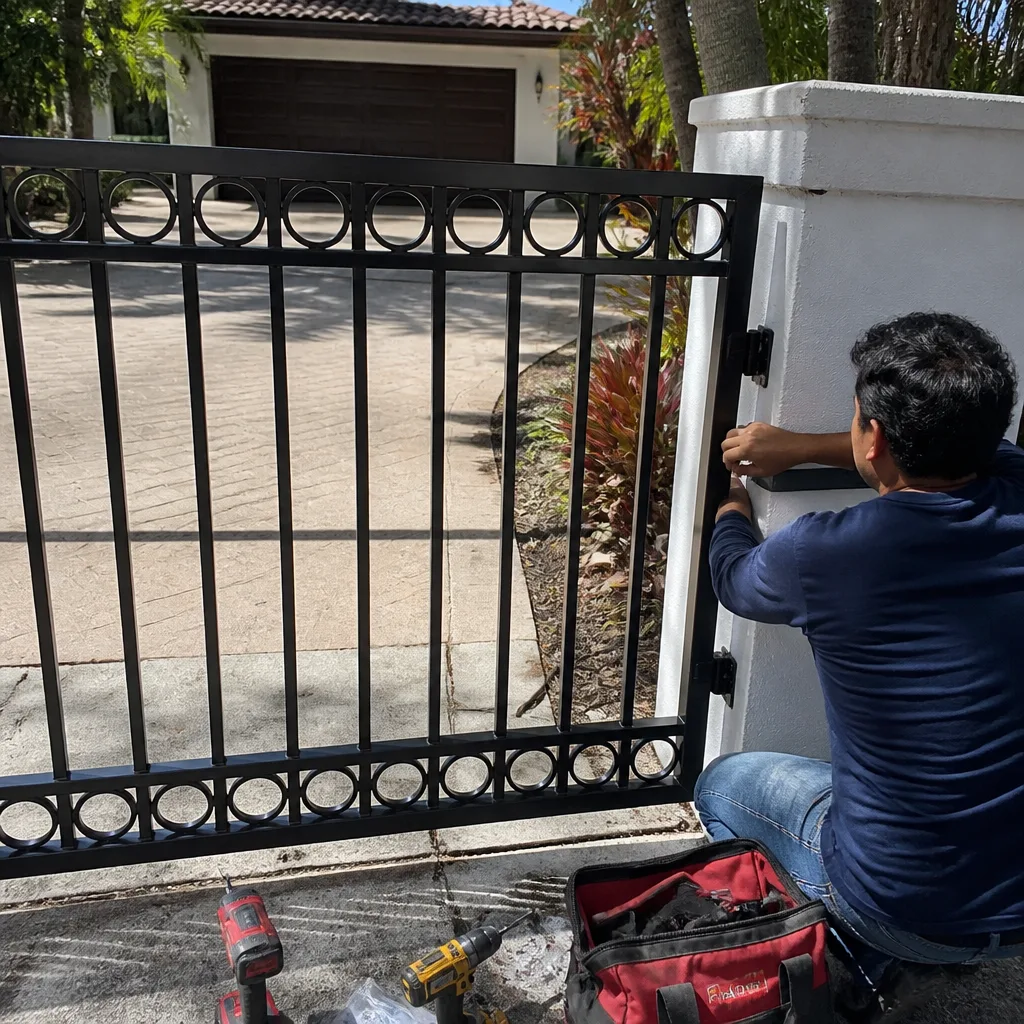
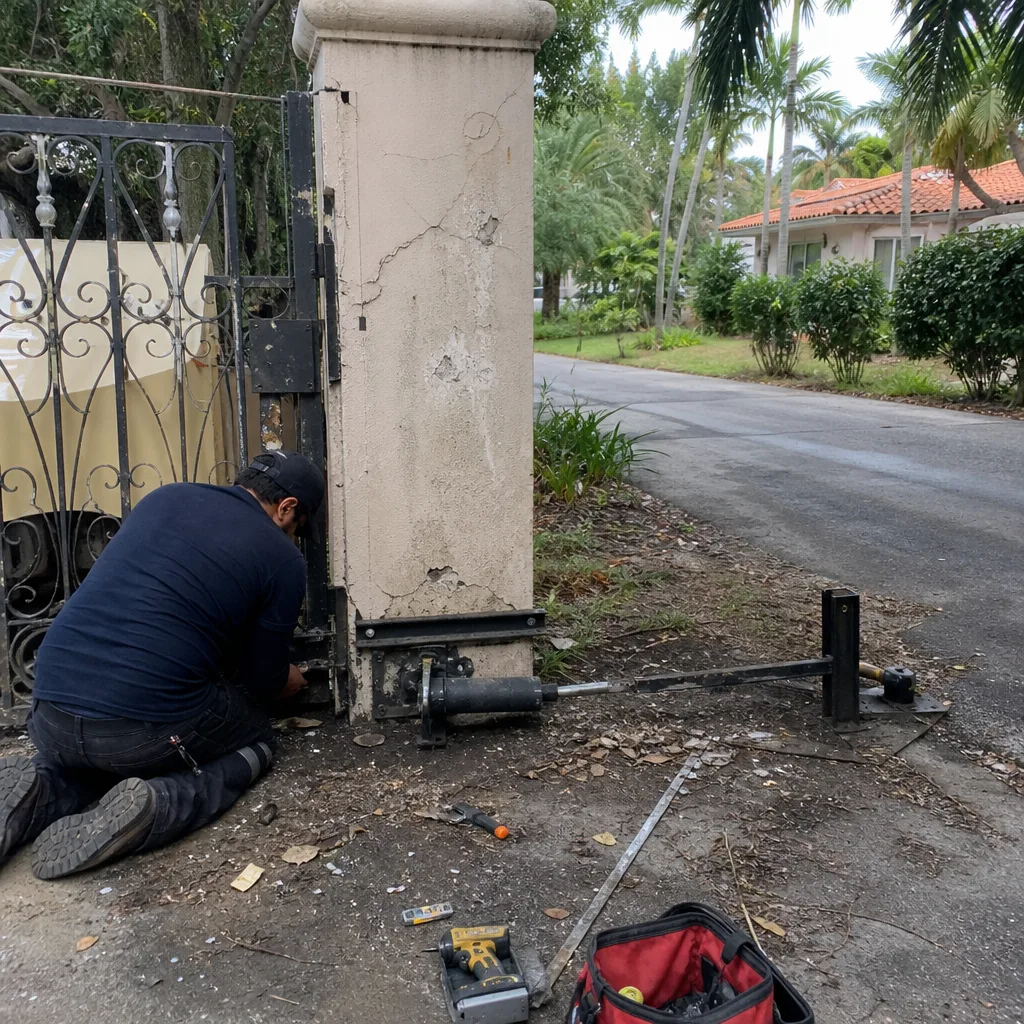
See the difference
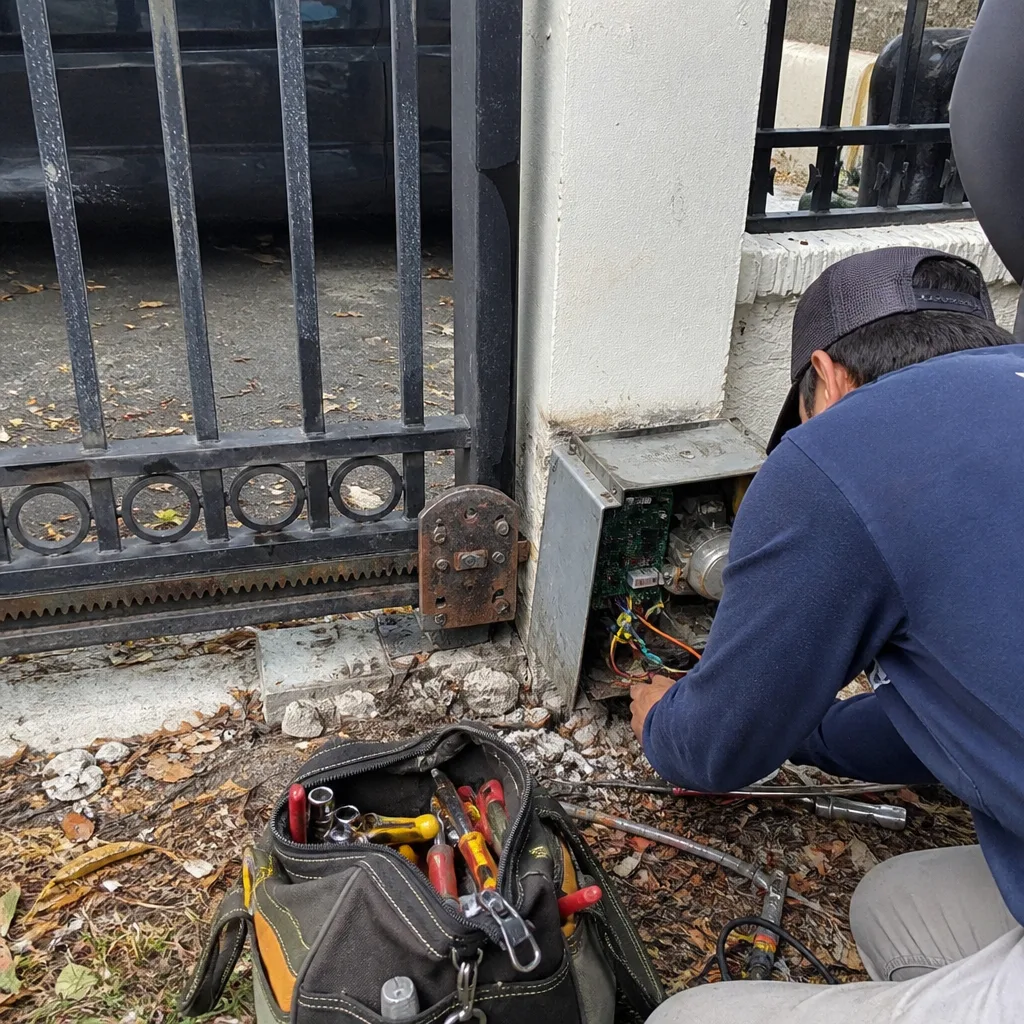 Before
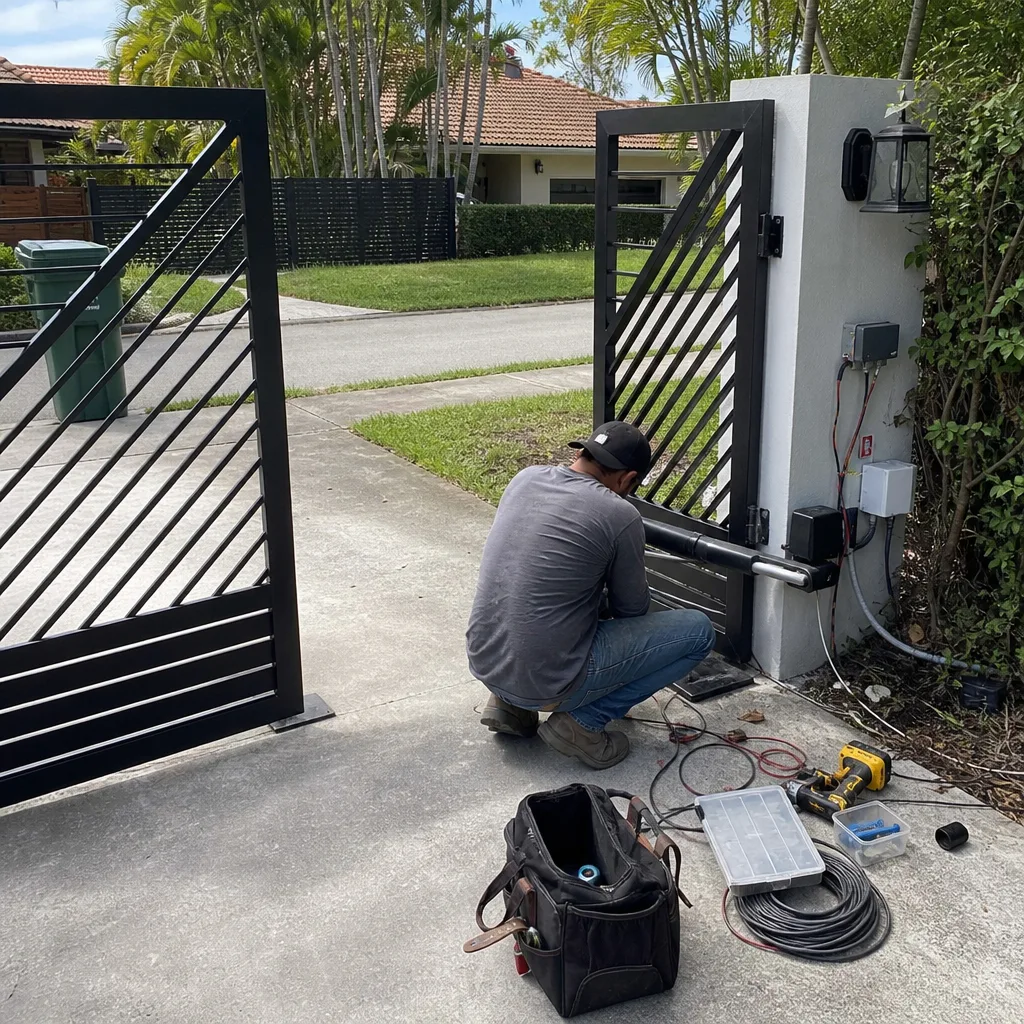 After
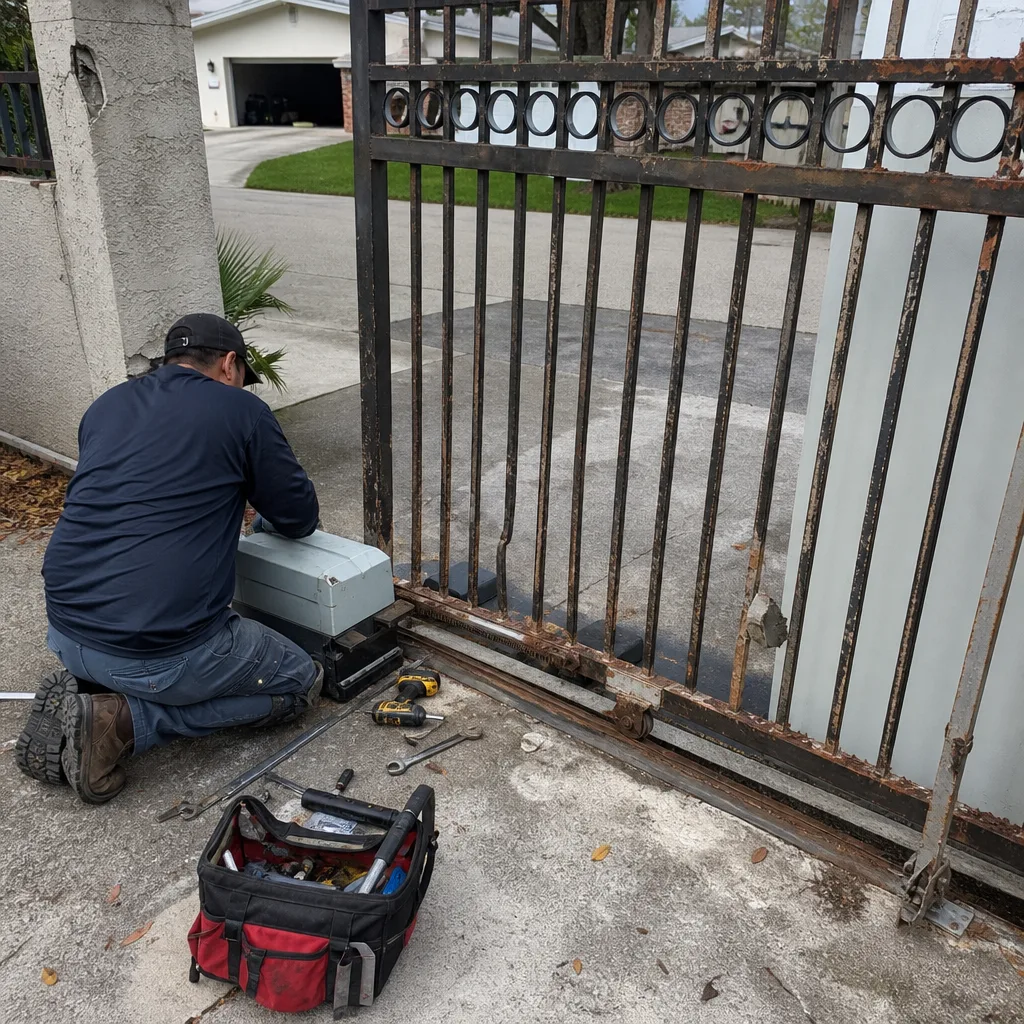 Before
 After
 Before
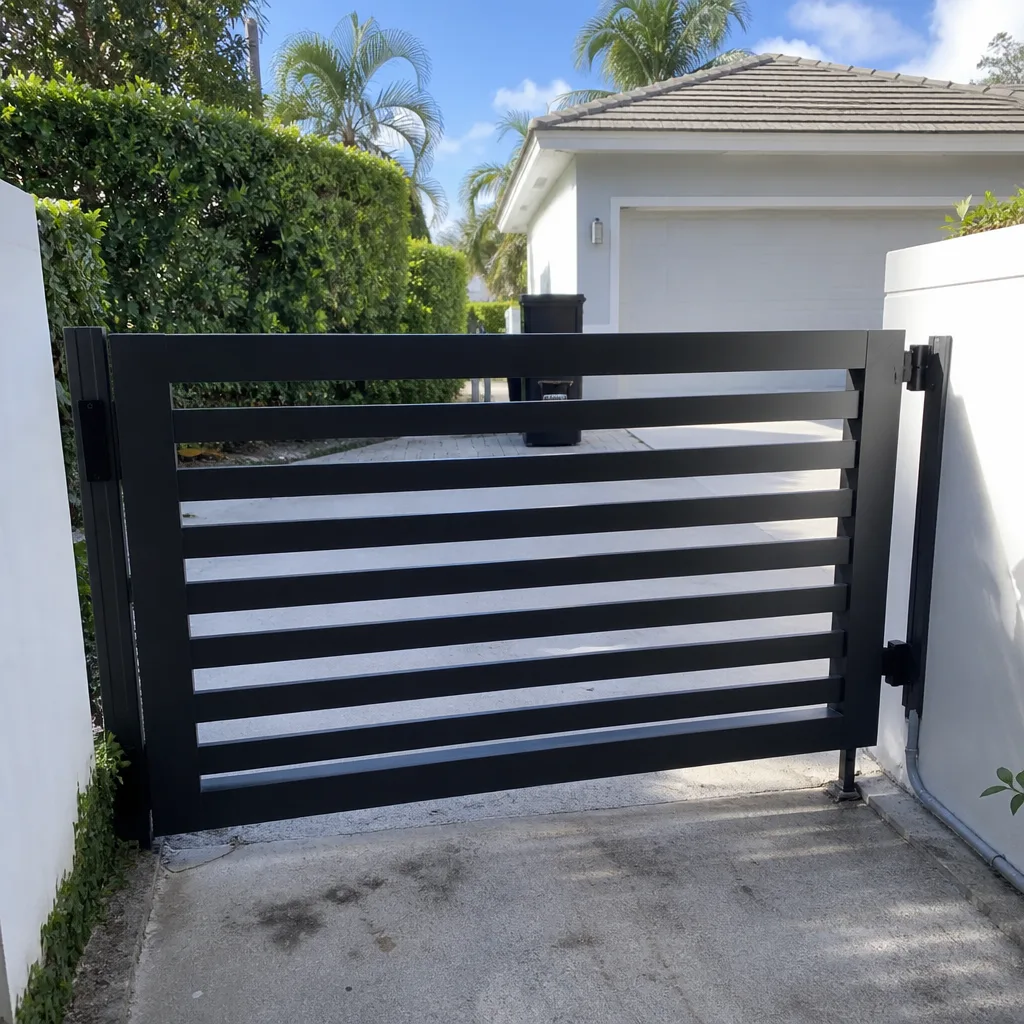 After