Last updated October 31, 2026
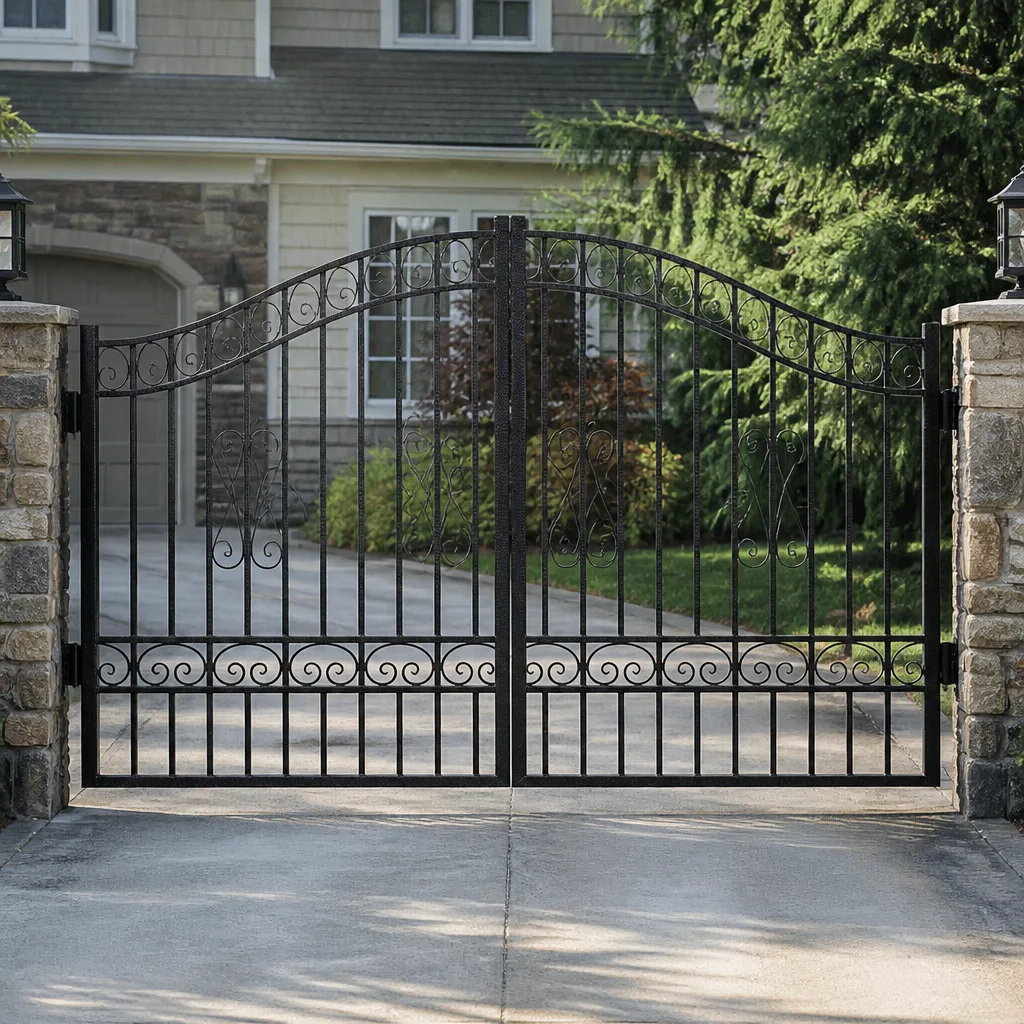 Wrought iron
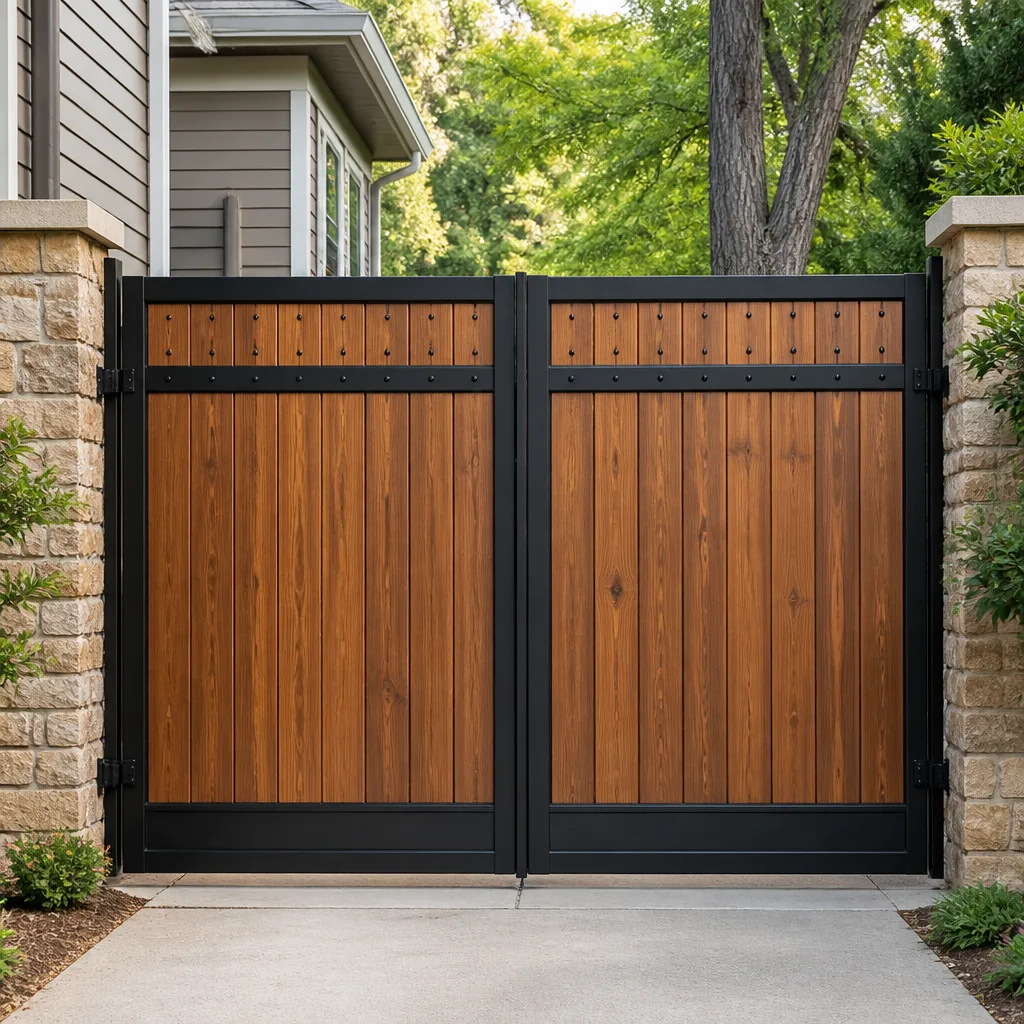 Wood & steel frame
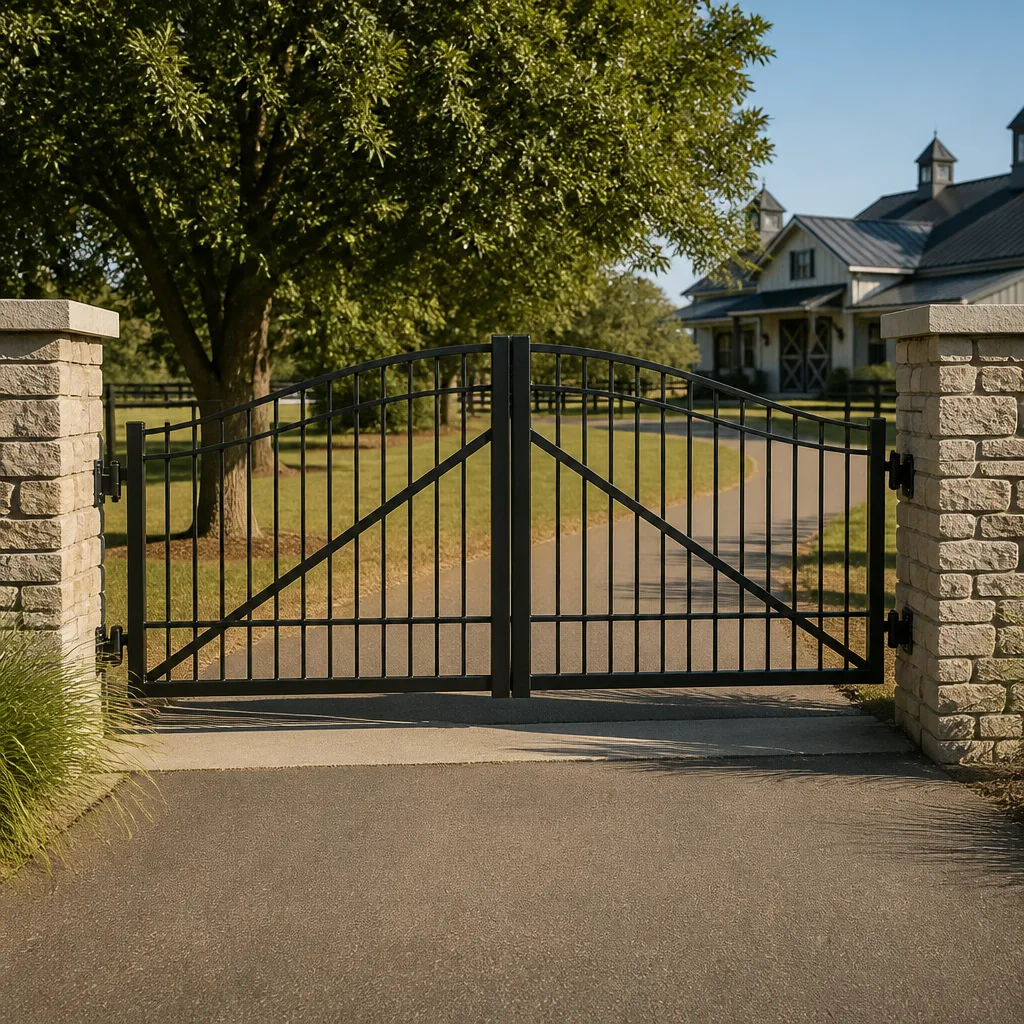 Farm & ranch
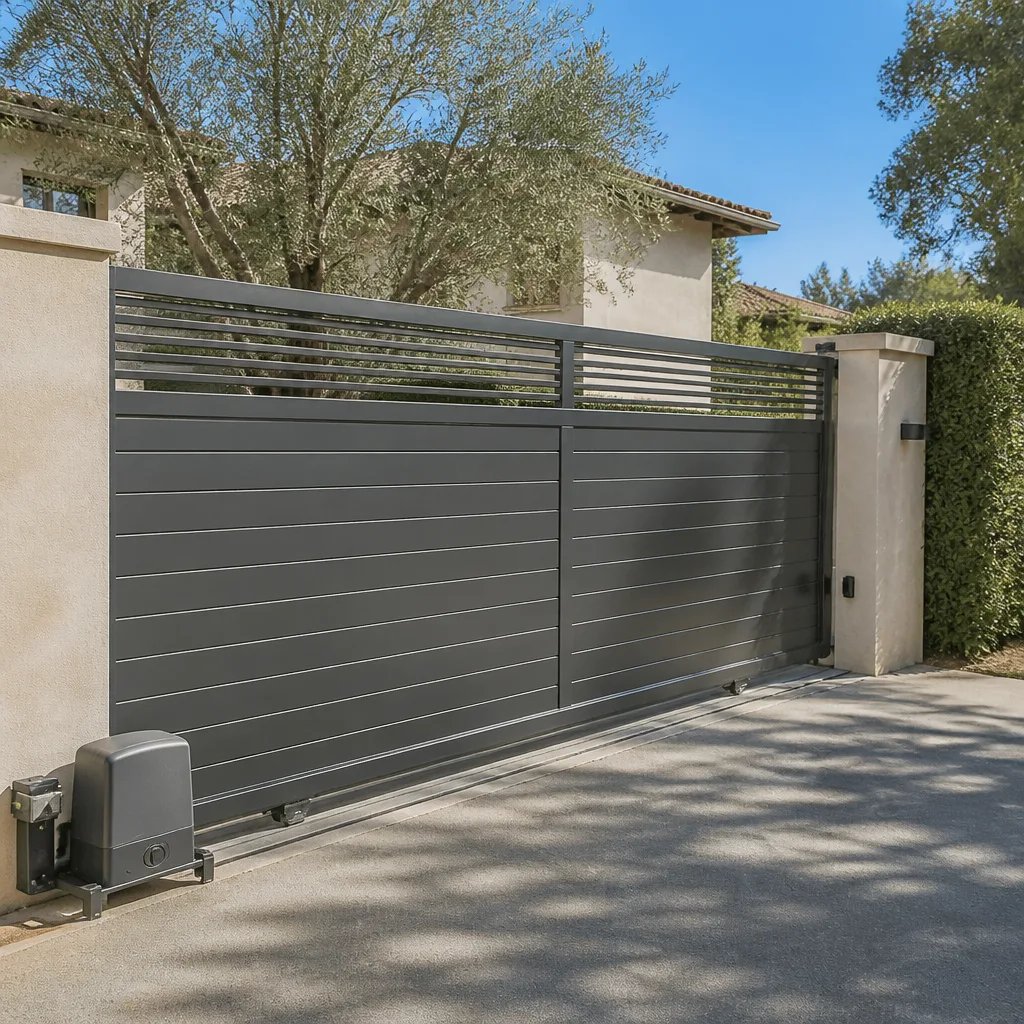 Sliding driveway gates
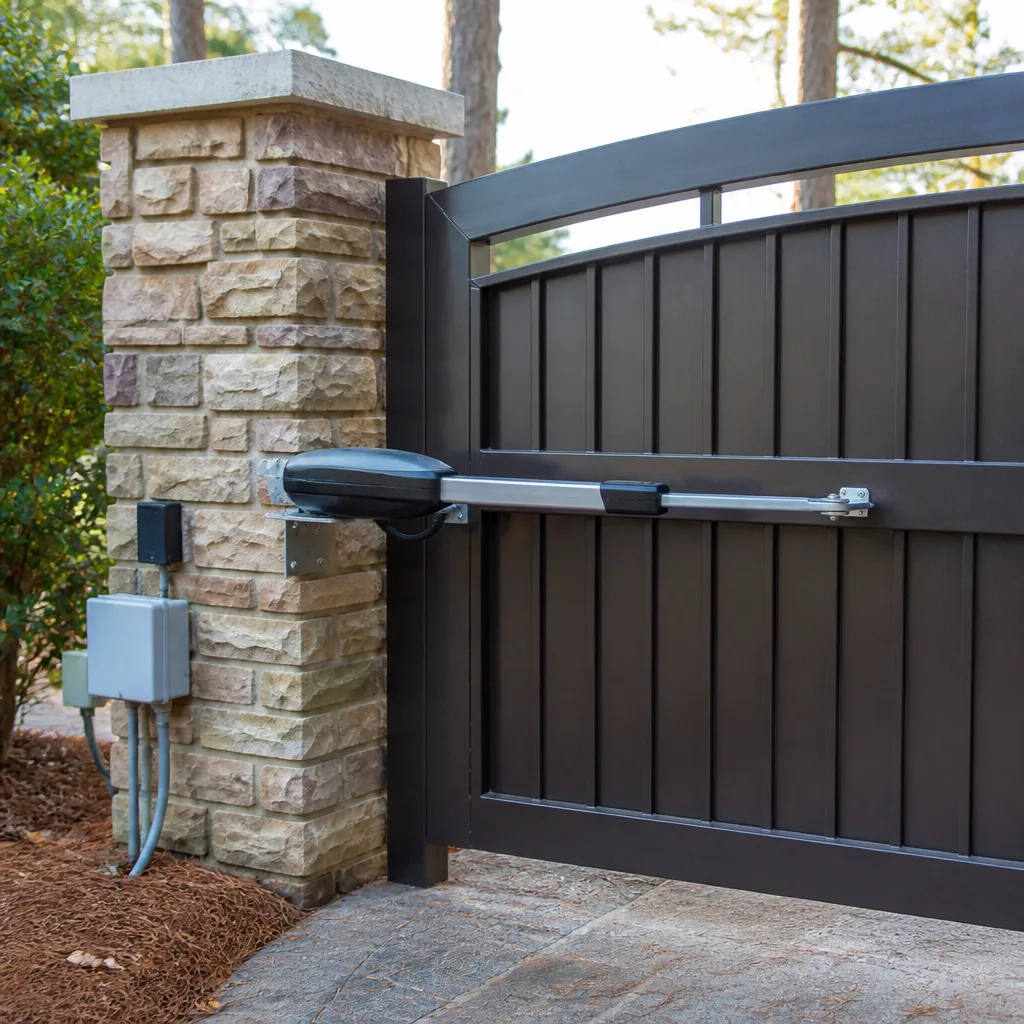 LiftMaster operators
Free on-site gate assessment - hinges, posts, and your LiftMaster or Nice gate operator checked before anything is quoted
The assessment is free and the quote is the invoice.
Get your free estimateGate Repair Permits, Codes & Inspections in FL: What You Need to Know
Unpermitted gate work is the most common surprise item in Hollywood-area real estate inspections, and it shows up at the worst possible moment: after an offer is accepted, when the buyer’s inspector starts matching the property against county records. A gate that was installed or modified without the right paperwork can stall a closing for weeks, force a re-inspection, or kill the deal entirely. The repair cost itself is almost always the smallest number in the room. The compliance cost, the time cost, and the deal cost are what actually hurt. This guide walks through the three layers of gate compliance in Florida – wind-load code, Broward County permitting, and HOA covenants – so you know what needs paperwork, what doesn’t, and how to fix a problem before it becomes a contract contingency.
Styles & brands we work with
Quick Answer
In Broward County, a true like-for-like gate repair – same posts, same operator, same footprint – generally does not require a permit. A new gate installation, a post replacement, or any electrical work on the operator typically does. Florida Building Code wind-load requirements apply to new gate posts and operators in Hollywood’s hurricane exposure category, and HOAs in Hollywood often require architectural approval before the county will even process the permit. If you’re selling, an unpermitted gate can be cured through a “reverse permit” process – we’ve guided homeowners through this in Hollywood more times than we can count. For ongoing issues, our Gate Repair services can help ensure your gate stays compliant.
Table of Contents
- When Does a Gate Repair Trigger a Permit in Broward County?
- Florida Wind-Load Code: What Hollywood Gate Posts and Operators Must Withstand
- HOA Approval vs. County Permit: The Order That Saves You Weeks
- The Broward Gate Inspection Checklist: Pass on First Review
- What “Unpermitted Structure” Means for Your Gate – and How to Cure It
- What Gate Permits Cost in Hollywood, FL
- Common Mistakes to Avoid
- When to Call a Professional
- Frequently Asked Questions
- The Bottom Line
When Does a Gate Repair Trigger a Permit in Broward County?
Broward County classifies gate work into two buckets: like-for-like replacement and new construction or modification. The distinction determines whether you need a permit at all. In practice, we’ve seen Hollywood homeowners get this wrong in both directions – pulling permits for work that didn’t need one, and skipping permits for work that absolutely did.
A like-for-like replacement means you’re swapping a broken part for an identical or functionally equivalent part without changing the gate’s structure, footprint, or electrical load. Replacing a worn hinge with the same size hinge falls into this bucket. Replacing a Mighty Mule control board with the same model does too. Replacing a bent gate wheel with a matching wheel is also like-for-like. No permit required.
A modification includes any of the following, and these do trigger Broward County permitting requirements:
- Replacing a gate post, even if the new post is the same size. The post is a structural element, and the county wants to verify the footing depth and concrete pour against current Florida Building Code.
- Changing the gate’s footprint or swing direction. A gate that swings outward instead of inward changes how wind loads transfer to the posts and hinges.
- Adding or replacing an operator. Electric gate openers involve low-voltage wiring, and Broward County treats any new electrical run as permit-worthy work. This includes retrofitting an existing manual gate with a LiftMaster or FAAC operator.
- Installing a new gate on a property that never had one. This is new construction in the county’s eyes, full stop.
- Adding safety devices like photo eyes, loop detectors, or edge sensors that require wiring changes to the operator.
Hollywood sits entirely within Broward County’s jurisdiction, so the county rules apply uniformly across neighborhoods like Emerald Hills, Hollywood Lakes, and the beachside communities east of A1A. That said, the city’s coastal exposure zones can ratchet up wind-load requirements beyond the county baseline, which we’ll get into next.
One nuance that catches people off guard: a repair that starts as like-for-like can cross into permit territory mid-job. If you’re replacing an operator and discover the existing wiring is undersized or degraded, running new conduit and wire changes the scope. In our experience, a quick call to the Broward County Building Department’s permit desk before the work starts saves more time than any other single step. Ask the question, get the answer in writing, and you’re protected if an inspector questions it later.
Florida Wind-Load Code: What Hollywood Gate Posts and Operators Must Withstand
Florida Building Code is the strictest wind-load code in the country, and for good reason. A gate is essentially a sail. When hurricane-force winds hit a closed gate, the pressure doesn’t just push on the gate panel – it transfers through the hinges, the posts, the operator arm, and the foundation. If any single component fails, you get a missile heading toward your house or your neighbor’s.
Hollywood falls into what the Florida Building Code calls the High Velocity Hurricane Zone (HVHZ) for certain coastal areas or Wind-Borne Debris Regions elsewhere. The practical difference for gate owners: posts must be engineered to withstand the uplift and lateral forces specified for the site’s exposure category, and operators must be anchored to a structural element, not just lag-bolted into a hollow post.
Here’s what the code actually requires for gate systems, in plain English:
- Gate posts must be set in concrete footings sized per manufacturer’s engineering and the site’s wind zone. In Hollywood’s beachside communities, the required footing depth is typically deeper than what a general contractor from inland Florida might assume. A post that’s plumb and stable on a calm day can fail structurally when a Category 3 pushes against it for six hours.
- The operator must be rated for the gate’s weight and wind exposure. A residential-grade opener that’s fine for a 300-pound gate in a sheltered side yard is not necessarily fine for a 600-pound aluminum gate on a Hollywood corner lot facing east. Oversizing the operator by 20-30% of the gate’s actual weight is cheap insurance and often required by code for high-exposure sites.
- All new gate installations in the HVHZ require a wind-load calculation or a prescriptive design from the manufacturer. Your permit application is not complete without it. Plan reviewers in Broward County will bounce an application that lacks the wind-load documentation, and that adds days to your timeline.
- Hinges and latches must have positive engagement – meaning they mechanically interlock or pin in the closed position. Gravity latches that rely on the gate’s weight alone don’t meet code for hurricane-prone zones.
What this means in practical terms: if someone gives you a quote for a new Hollywood gate and the price seems suspiciously low, ask whether the quote includes the wind-load calculations, the footing inspection, and the permit. A gate that meets code for Miami-Dade might not meet code for Hollywood if the exposure category differs, and vice versa. The county’s plan reviewers look for site-specific engineering, not a one-size-fits-all spec sheet.
In our experience working on gates in Hollywood and the surrounding Broward cities, the most common wind-load failure we see is post fatigue. For a deeper look at identifying problems early, see our Gate Repair Warning Signs: A Hollywood Homeowner’s Reference Guide. A post that was undersized for the gate or set in a shallow footing will start leaning after the first serious storm, and by year five the gate drags on the ground or binds at the latch. The code exists because the failure mode is predictable. Complying on the front end is cheaper than excavating and re-pouring a footing later.
HOA Approval vs. County Permit: The Order That Saves You Weeks
Hollywood has a high concentration of homeowners associations, from small condo associations along the Intracoastal to large planned communities west of I-95. If your property is governed by an HOA, you’re dealing with two separate approval processes, and the order matters more than most people realize.
The correct sequence is: HOA first, county second. Here’s why. An HOA architectural review committee can deny a gate design that the county would happily permit. If you pull the county permit first and then get denied by the HOA, you’re stuck with a paid permit for a gate you can’t build, plus the hassle of voiding it. If you start with the HOA and get written approval for the specific design, material, color, and height, the county review becomes a formality – the county cares about safety and code compliance, not whether the gate matches your neighbor’s.
Here’s the step-by-step order we recommend to every Hollywood client:
- Read your HOA’s covenants, conditions, and restrictions (CC&Rs) for the gate section. Most HOAs have specific language about gate height, material, finish, and whether electric operators are allowed at all. Some HOAs require a specific operator brand; others prohibit certain styles like chain-link or wood.
- Submit an architectural modification request with drawings, material samples, and the proposed operator spec (if it’s an electric gate). Include the wind-load documentation even if the HOA doesn’t ask for it – it shows the gate is engineered, not improvised.
- Wait for written HOA approval. Do not start work on a verbal okay. Verbal approvals disappear when the HOA board turns over, and the new board has no record of the conversation. Get it in writing, or email.
- Apply for the Broward County permit with the HOA approval letter attached. The county will not ask for the letter, but having it in your files protects you if the HOA later disputes the work.
- Complete the work and schedule inspections. The HOA may want to do a final walkthrough to confirm the built gate matches the approved design.
One Hollywood-specific wrinkle: some of the older beachside communities east of A1A have historic district overlays that add a third approval layer. If your neighborhood has a historic designation, check with the city’s historic preservation board before applying for the county permit. These overlays can restrict gate materials (wrought iron may be required, or aluminum may be prohibited), and fighting that battle after the fact is expensive.
We’ve seen HOAs in Hollywood hold a hard line on gate aesthetics even when the homeowner is installing purely for security. A photo-realistic rendering with the exact finish matched to neighboring gates goes a long way. If the HOA sees that the proposed gate looks like every other gate on the street, the approval usually moves fast. If they can’t picture it, they’ll defer it – and a deferred HOA request can sit for months.
The Broward Gate Inspection Checklist: Pass on First Review
When a Broward County inspector comes out to review your gate work, they’re not doing a casual walkthrough. They’re checking against a specific code checklist, and a missed item means a failed inspection, a re-inspection fee, and a delay. The goal is to pass on the first visit, and the path to getting there is knowing exactly what the inspector will look for.
Here’s the inspection checklist we prepare every Hollywood gate project against:
- Permit card posted and visible from the street. The inspector won’t even get out of the truck if the permit isn’t posted. This sounds obvious, and it’s still the most common first-visit failure.
- Footing depth and diameter match the approved plan. The inspector will look at the hole before the concrete is poured, not after. Don’t pour concrete on a post until the footing inspection has been called and passed if your permit requires it.
- Post plumb and properly anchored. A 4-foot level on the post in both directions. If the post is leaning, the inspection stops right there.
- Gate swings freely without binding or scraping. The inspector will open and close the gate by hand if possible. A gate that hangs up on its track or drags the ground is an automatic fail.
- Operator properly mounted and wired per code. Low-voltage wiring must be in conduit where exposed, connections in a weatherproof enclosure, and the operator must be properly grounded. If the operator is a LiftMaster or BFT unit, the inspector will check for the UL listing and the manufacturer’s installation plate.
- Safety devices functional. If the gate is automated, the inspector will test the reversing mechanism, the photo eyes or edge sensors, and the warning signage. A gate operator that can crush a person or a car is a liability the inspector will not sign off on.
- Wind-load documentation available on site. For new gates in Hollywood’s coastal exposure zones, have the engineering letter or manufacturer’s wind-load table printed and ready. The inspector may not ask for it, but having it in hand signals that the work was planned, not improvised.
In our experience working with Broward inspectors, the two things that most often cause a failed first visit are an unposted permit card and an operator safety device that isn’t functioning. Both are avoidable with ten minutes of pre-inspection checking. The inspector wants to pass the work – they’re not looking for reasons to fail you. But they can’t sign off on a gate that doesn’t meet the code requirements they’re legally bound to enforce.
If you’re having a gate company handle the full scope, ask them upfront: “Do you manage the inspections, and do you stand behind the work through final sign-off?” A contractor that walks away after the install and leaves the inspections to the homeowner is creating a headache you’ll inherit. The team at Carter Gate Repair home as gate specialists manages the full permit-to-inspection process for Hollywood clients, including the coordination with the county and the HOA.
What “Unpermitted Structure” Means for Your Gate – and How to Cure It
When a Hollywood property goes under contract, the buyer’s home inspector and the title company both look for work that doesn’t match county records. A gate that was installed without a permit shows up as an “unpermitted structure” designation, even though a gate isn’t a structure in the way a room addition is. The designation matters because it creates a disclosure obligation for the seller and a financing obstacle for the buyer.
The most common scenario in Hollywood: a previous owner installed a new gate and operator years ago, the work was done well, and nobody thought about permits. The current owner lists the house, the buyer’s inspector flags the gate as unpermitted, and now the transaction has a compliance contingency. The buyer’s lender may require the permit issue to be resolved before closing, or the buyer may demand a price concession.
Curing an unpermitted gate is possible, and in Broward County the process is straightforward if the gate meets current code:
- Hire a licensed contractor to evaluate the gate against current Florida Building Code. This is a code-compliance assessment, not a repair quote. The contractor identifies any shortfalls (undersized posts, missing safety devices, improper wiring) that would prevent the gate from passing an inspection.
- Bring the gate into code compliance. This may mean replacing a post, upgrading the operator’s safety devices, or running new wiring. In our experience, most unpermitted Hollywood gates need at least one safety upgrade – often a photo eye or edge sensor that was skipped on the original install.
- Apply for an “as-built” permit through Broward County. The county issues permits for existing work that was never permitted, as long as the work is brought up to current code. This is sometimes called an after-the-fact permit or a reverse permit.
- Pass the inspection. The county inspector reviews the gate against the same checklist they use for new work. Pass the inspection, and the unpermitted designation is cleared from the property record.
- Close the sale. With the permit closed out, the buyer’s concern is resolved, and the transaction can proceed without the compliance contingency hanging over it.
The cost to cure an unpermitted gate in Hollywood is almost always less than the cost of the deal-kill or the price concession it creates. We’ve seen buyers demand $5,000 to $10,000 off the purchase price for an unpermitted gate, when the actual cure cost was under $1,500. The asymmetry exists because the buyer’s risk is unclear – they don’t know what the gate will cost to bring into compliance until someone tells them. Once you have a contractor’s assessment and a fixed quote, the ambiguity disappears.
For Hollywood sellers, the advice is simple: if you know your gate was never permitted, cure it before you list. The buyer will find it anyway, and a pre-listing cure means you control the timeline and the cost. If you’re not sure whether your gate was permitted, check the Broward County property records online – your gate permit, if it exists, will be in the permit history alongside any other work done on the property.
What Gate Permits Cost in Hollywood, FL
Broward County permit fees are based on the valuation of the work, not a flat rate. For gate work, the valuation is the total cost of the project including materials, labor, and the operator, and the fee is a percentage of that valuation. For a typical residential gate installation in Hollywood valued between $3,000 and $8,000, the permit fee generally falls between $100 and $400.
Here’s a breakdown of what to budget for:
- County building permit: $100 to $400 for most residential gate projects, based on valuation. Larger commercial gates with higher valuations will pay more.
- HOA architectural review fee: $0 to $250 depending on the association. Some HOAs charge a review fee; others cover it as part of your assessments.
- Wind-load calculation or engineering letter: $150 to $500 if your project requires site-specific engineering beyond the manufacturer’s prescriptive design. Many standard gate installations can use the manufacturer’s wind-load table at no additional cost.
- Re-inspection fee: $50 to $150 if the first inspection fails. This is the fee you avoid by preparing against the checklist above.
- After-the-fact permit penalty: Typically double the standard permit fee for work that was completed without a permit. This applies when curing an unpermitted gate in Hollywood, and it’s part of the reason the cure cost is higher than the original permit would have been.
These numbers are ranges based on the projects we’ve managed in Hollywood. They’re directionally accurate but not a substitute for a written quote from the county or your contractor. The point is that the permit cost is a rounding error compared to the total project cost, and skimping on it creates a liability that costs far more later.
If you’re comparing quotes for a gate installation in Hollywood, ask every bidder the same question: “Is the permit included in this price, or is it separate?” A quote that excludes the permit is not an apples-to-apples comparison with one that includes it. The lowest quote is sometimes lowest because it’s unpermitted. That’s not a savings; it’s a deferred cost with interest.
Common Mistakes to Avoid
- Pulling the county permit before getting HOA approval. If the HOA denies the design, you’re stuck with a permit for a gate you can’t build. HOA first, county second. Always.
- Assuming all gate repairs are permit-free. Like-for-like part swaps don’t need a permit, but anything structural or electrical does. When in doubt, call the Broward County Building Department and ask. A phone call costs nothing and prevents a failed closing.
- Pouring the concrete footing before the footing inspection. If the inspector needs to see the hole and the concrete is already poured, you’re either digging it out or claiming it meets depth on faith. The inspector won’t take it on faith.
- Using a residential operator on a heavy or high-wind-exposure gate in Hollywood. An undersized operator wears out fast, fails during storms, and often doesn’t meet the wind-load requirements for coastal exposure zones. Size the operator for the gate’s actual weight plus margin, not the gate’s ideal-world weight.
- Skipping the safety devices on an automated gate. A gate operator without a functioning reversing mechanism or photo eye is a liability and a code violation. The inspector will catch it, and if they don’t, a future injury claim will be made worse by the missing safety equipment.
- Leaving an unpermitted gate unresolved before listing a Hollywood home. The buyer’s inspector will flag it, and the transaction will stall. Cure it before you list, when you control the timeline and the contractor relationship.
- Taking a verbal HOA approval as final. HOA boards change, and a verbal okay disappears when the new board questions the gate. Get written approval before any work starts.
When to Call a Professional
Some gate work is safely DIY-able – replacing a gate wheel, tightening hinges, adjusting a latch catch. The projects that involve permits, electrical work, or structural changes are not. If your Hollywood gate project involves replacing a post, installing or modifying an operator, changing the gate’s footprint, or curing an unpermitted structure, a licensed professional saves you time and protects you from the compliance problems this guide describes.
Working with a contractor who understands Broward County’s permit process, Florida’s wind-load code, and Hollywood’s HOA landscape means you’re not learning these rules on the fly while a buyer’s inspector is standing in your driveway. Gate Repair in Hollywood manages the full permit-to-inspection process for every project, including coordination with the county and the HOA. For electric gate work specifically, Electric Gate Repair in Hollywood covers operators from LiftMaster, BFT, FAAC, and Mighty Mule, with the low-voltage wiring and safety-system experience that automated gates require. If you need a new gate system designed, permitted, and installed to code, Gate Installation in Hollywood handles the full scope from footing to final inspection.
Carter Gate Repair offers free estimates in Hollywood – call (866) 665-5592 and we’ll walk your gate, tell you what needs a permit and what doesn’t, and give you a written price before any work starts.
Frequently Asked Questions
Yes, replacing or adding a gate operator requires an electrical permit in Broward County because it involves low-voltage wiring and safety-device integration. A like-for-like operator swap with no new wiring may not require a permit, but if the wiring or conduit changes, the work crosses into permit territory. Call (866) 665-5592 to have us evaluate your specific operator replacement and confirm the permit path before work begins.
A residential gate permit in Hollywood typically costs between $100 and $400 based on the project valuation, plus any HOA review fee and a possible engineering letter for high-exposure coastal sites. The exact fee depends on your project’s total cost and scope. Estimates are free – call (866) 665-5592 for a written quote that includes the permit fee broken out separately.
You can list it, but the buyer’s inspector will flag the unpermitted gate during due diligence, and the transaction will likely stall until the permit issue is resolved or a price concession is made. Curing the gate before you list costs less than the deal concession and removes a negotiation point. We help Hollywood sellers cure unpermitted gates through Broward County’s after-the-fact permit process every month.
Most Hollywood HOAs require approval for any visible change to the gate – including new installations, operator additions, material changes, and sometimes even a repaint in a different color. Pure repair work that restores the gate to its original condition usually does not require HOA approval. Read your CC&Rs and ask your HOA management company in writing before starting.
The operator must be rated for the gate’s actual weight and the site’s wind exposure category, which for Hollywood’s coastal neighborhoods means a heavy-duty or commercial-grade operator on a gate that would only need a residential unit inland. A BFT or LiftMaster commercial operator is often the right call for beachside properties even on a single-family residential gate. We spec the operator to the gate and the site, not to a generic chart.
A failed inspection means the inspector identifies a code deficiency, you correct it, and you schedule a re-inspection for an additional $50 to $150 fee. The most common failures are unposted permit cards, non-functioning safety devices, and posts that aren’t properly anchored. Preparing against the inspection checklist above is the cheapest way to avoid a second visit.
The Bottom Line
Gate compliance in Hollywood, FL comes down to three layers: Florida wind-load code that governs post depth and operator sizing, Broward County permitting that separates like-for-like repair from structural or electrical work, and HOA covenants that control aesthetics and often dictate approval order. Get the order right – HOA first, county second – and the process moves fast. Skip a layer, and the problem surfaces later, usually during a home sale when it’s most expensive to fix. The permit costs $100 to $400. The cure for skipping it costs triple that, plus time, plus deal risk. If you’re unsure where your gate stands, get it evaluated before it matters.
Written by the team at Carter Gate Repair, serving Hollywood since 2015.
See the difference
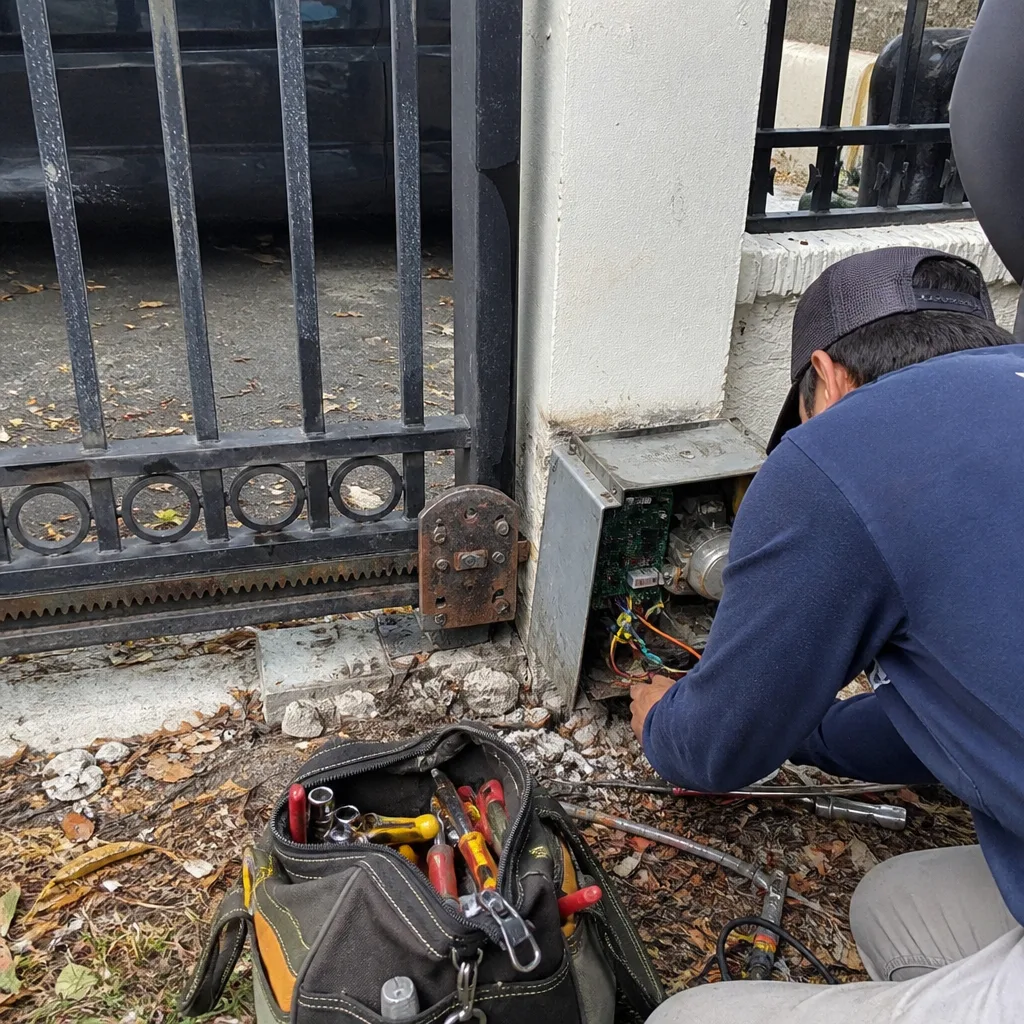 Before
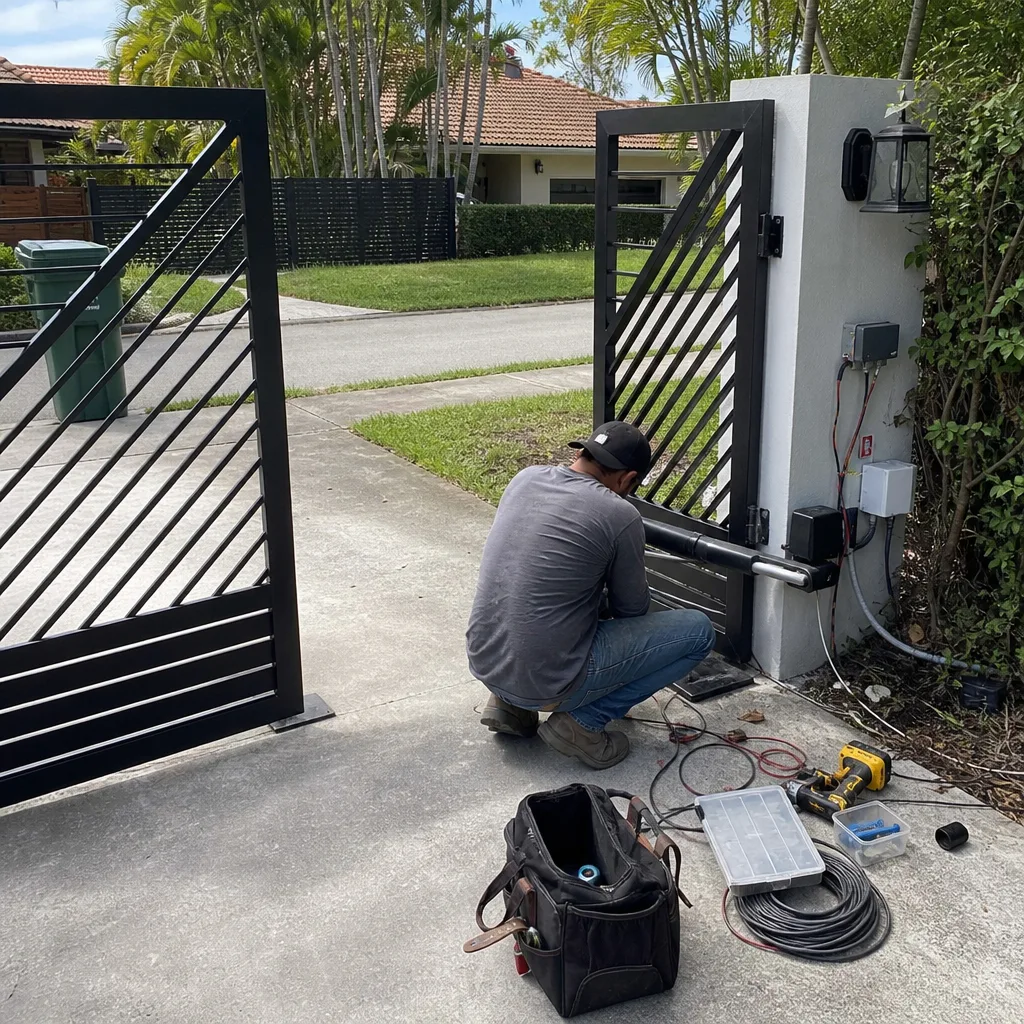 After
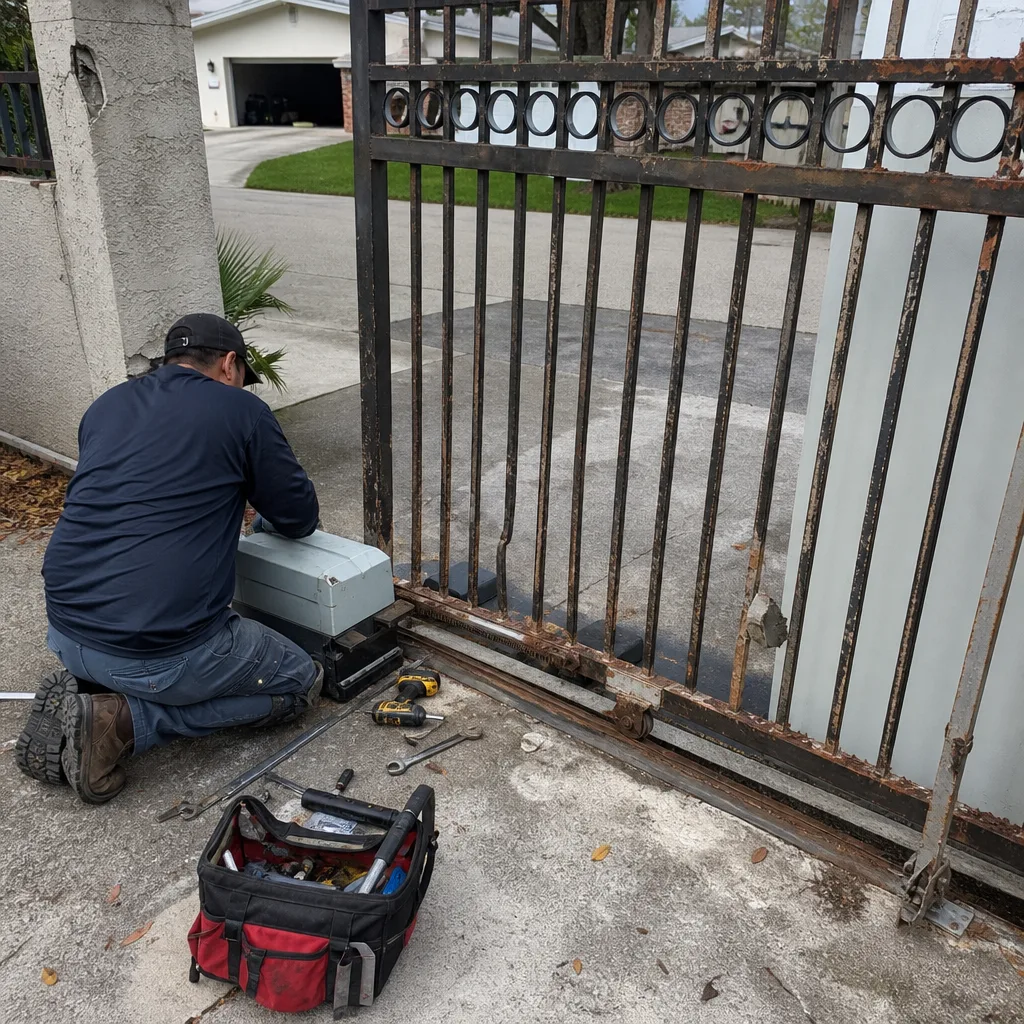 Before
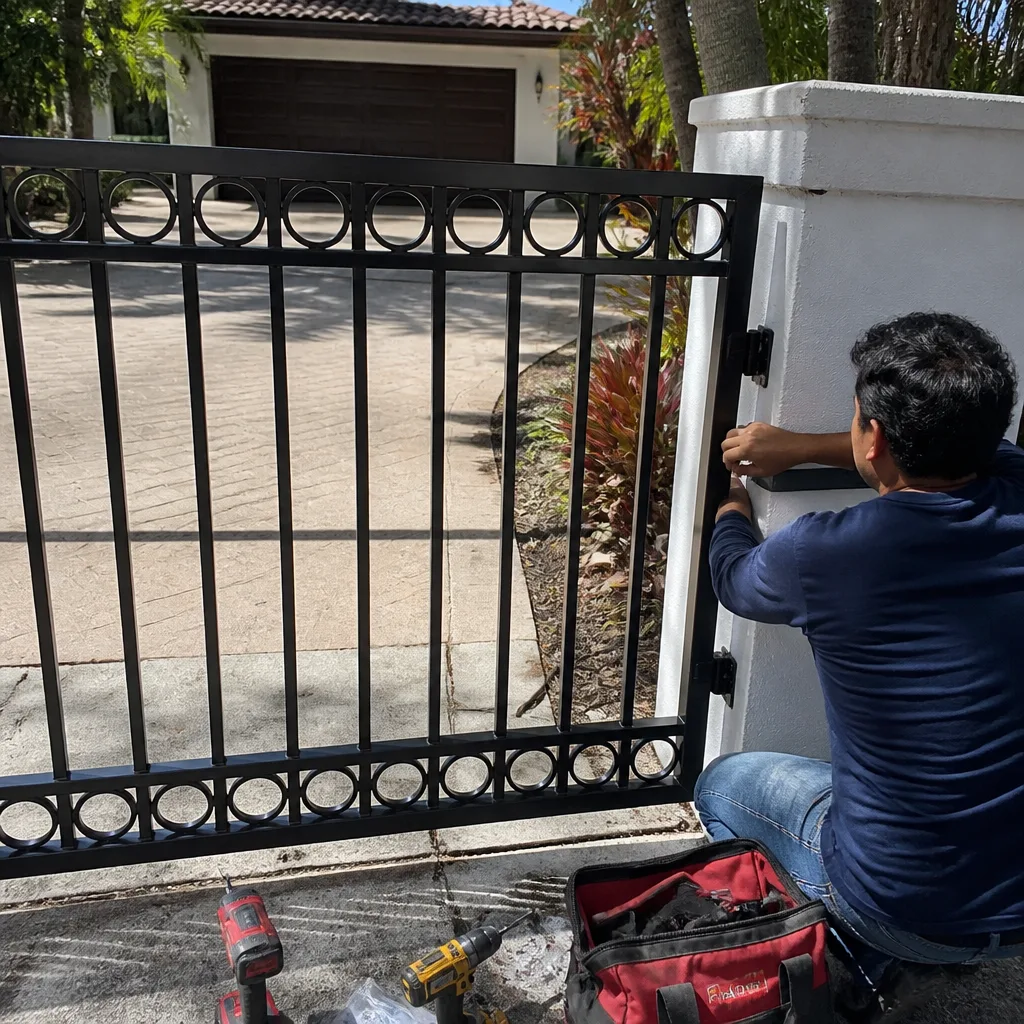 After
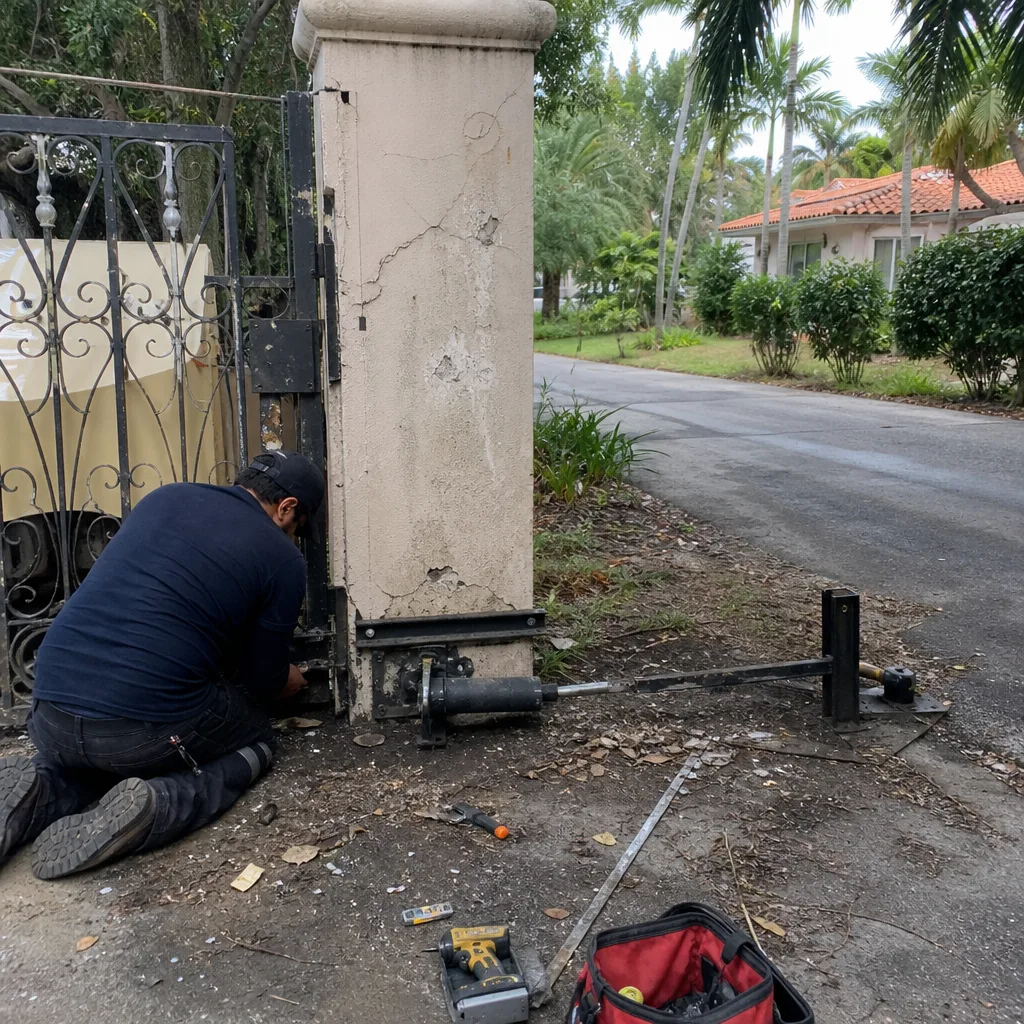 Before
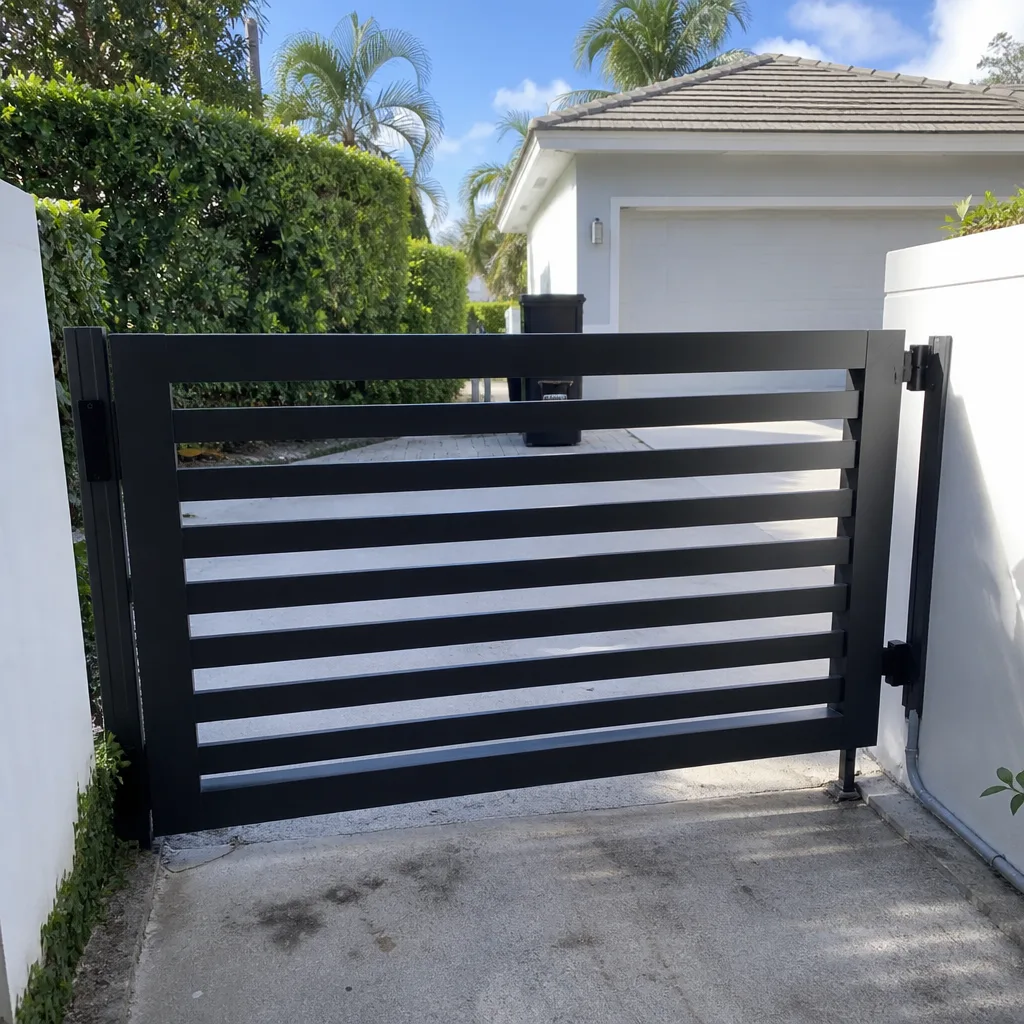 After