Last updated October 31, 2026
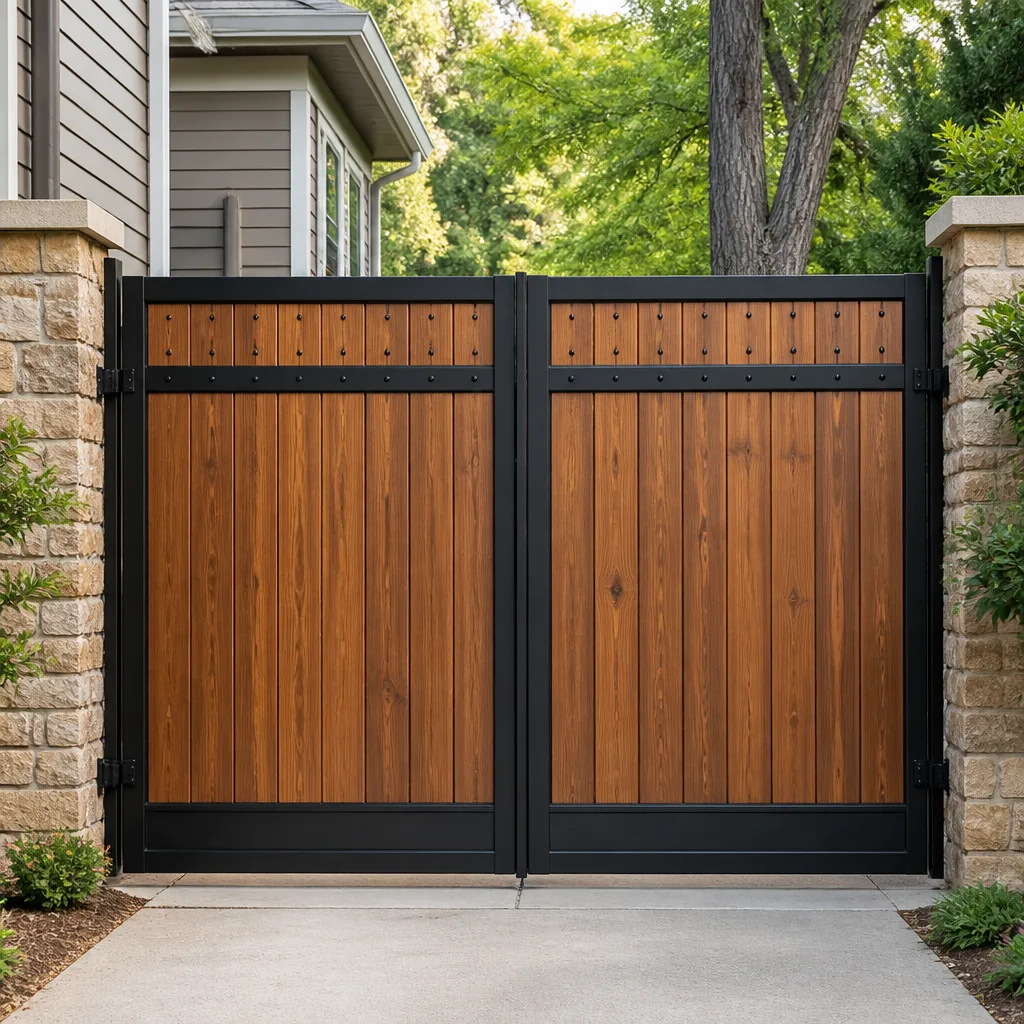 Wood & steel frame
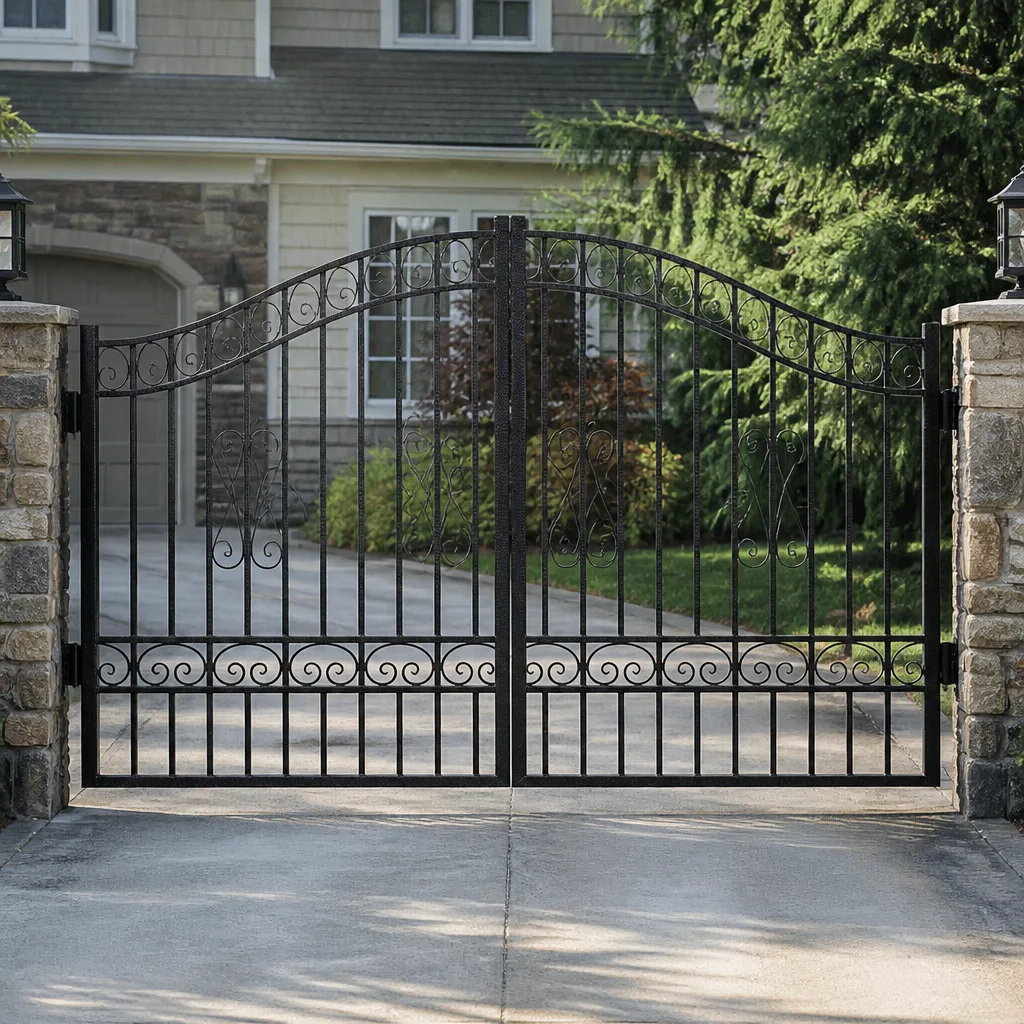 Wrought iron
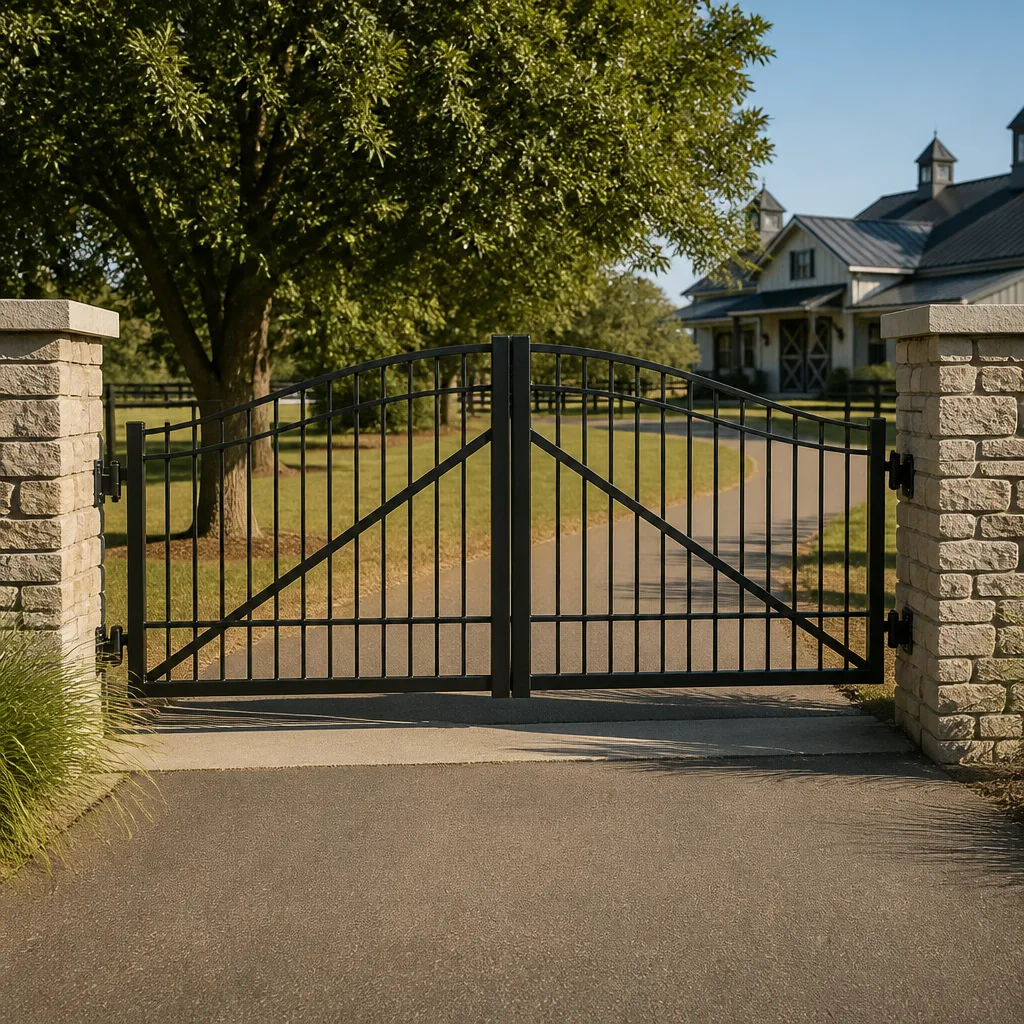 Farm & ranch
 Sliding driveway gates
 LiftMaster operators
Free on-site gate assessment - hinges, posts, and your LiftMaster or Nice gate operator checked before anything is quoted
The assessment is free and the quote is the invoice.
Get your free estimateDIY vs Professional Gate Repair: The Hollywood Homeowner’s Decision Guide
The most expensive gate repair call we take in Hollywood isn’t the catastrophic failure where a gate lies twisted on the driveway. It’s the quiet one, the phone call that starts with “Well, I was adjusting the limit switches and now the control board won’t respond.” That homeowner was trying to save $150 on a service call. The repair ended up costing them a new $400 board plus the labor they were avoiding in the first place. This guide exists so you don’t make that call. We’ll walk through which gate tasks genuinely belong in a homeowner’s hands in Hollywood, which ones have hidden costs you can’t see until they bite, and how to tell the difference before you pick up a screwdriver.
Styles & brands we work with
Quick Answer
In Hollywood, about 20% of gate maintenance tasks are genuinely safe for a competent DIY homeowner: cleaning photo-eye sensors, lubricating hinges, tightening visible bolts, and swapping remote batteries. Everything involving the operator, control board, electrical wiring, or structural alignment of the gate itself belongs with a licensed specialist. The wrong DIY call on an electric gate averages $480 in damage before the pro even arrives.
Table of Contents
- The Task-by-Task Breakdown: What’s Yours, What’s Ours
- Why Hollywood Gates Fail Differently Than Gates Anywhere Else
- The DIY-Safe List: Four Tasks a Hollywood Homeowner Can Handle
- Professional Territory: Six Repairs That Demand a Specialist
- How to Diagnose Before You Touch Anything
- The Hidden Costs of Partial DIY Repairs
- When to Stop: The Five Signals Your DIY Attempt Has Gone Too Far
- Hollywood HOAs, Florida Code, and Your Gate
- Common Mistakes to Avoid
- When to Call a Professional
- Frequently Asked Questions
- The Bottom Line
The Task-by-Task Breakdown: What’s Yours, What’s Ours
Gate repair isn’t one activity. It’s a spectrum that runs from wiping a lens to reprogramming a microprocessor. The Hollywood homeowner who understands where a task sits on that spectrum can save a service call without gambling on a board replacement. Lumping all gate work into “DIY or not” is how people end up either paying for a trivial fix or causing a serious one.
Here’s the honest breakdown based on what we see across Hollywood, from the guard-gated communities off Sheridan Street to the single-family homes in Emerald Hills:
- Safe DIY: Lubricating hinges and rollers, cleaning photo-eye lenses, tightening accessible bolts, replacing remote batteries, clearing debris from the gate track.
- Conditional DIY (know your limits): Replacing a wireless keypad when the wiring is external and the manual is clear, replacing a solar panel on a Mighty Mule opener when it’s a direct plug swap, resetting a GFCI outlet that powers the gate. These live in a gray zone. The moment the fix involves touch-safe voltage or opening the operator housing, reconsider.
- Professional only: Control board diagnostics or replacement, limit switch adjustment on any hydraulic or screw-drive operator, any repair involving 120V or 240V lines, gate frame repair, hinge replacement on a sagging gate, loop detector replacement or tuning, safety sensor reversal, and any situation where the gate weighs more than 200 pounds and is off its track.
That last category isn’t there to protect our business. It’s there because the tools to do those jobs correctly, the time, and the risk profile don’t pencil out for most Hollywood homeowners. A hinge replacement on a 400-pound iron gate isn’t a Saturday afternoon project. It’s a two-person minimum with a gate jack and a torque wrench.
For context on what a professional gate repair in Hollywood actually involves, start with what the repair covers, not just what it costs. The difference between the two categories above is where most money is won or lost.
Why Hollywood Gates Fail Differently Than Gates Anywhere Else
Hollywood, Florida has a specific gate-failure profile. It’s not like Phoenix or Denver or even Miami 20 miles south. Salt air, daily humidity, and the afternoon thunderstorm cycle create a combination that accelerates specific failure modes while making others almost irrelevant. If you understand this, you’ll diagnose faster and waste less time on the wrong fix.
Salt air near the coast in Hollywood Beach and Hallandale Beach corrodes electrical contacts inside operator housings even when the housing is sealed. We’ve opened LiftMaster and FAAC operators in Emerald Hills that looked fine from the outside and had green fuzz on the terminal strips inside. That’s not a homeowner-visible problem and it’s definitely not a homeowner-fixable one. The corrosion creates resistance, resistance creates heat, heat cooks control boards. What starts as an intermittent “gate opens halfway then stops” becomes a dead board in three months.
Condensation is the second killer. In Hollywood, the daily temperature swing means an operator housing breathes moisture in and out every 24 hours. BFT and FAAC units with older, slightly warped gaskets are particularly vulnerable. The homeowner who sees a bead of water inside the housing and decides to drill a drain hole just guaranteed a board replacement. The correct fix is a new gasket and a conformal coating on the board, which is a specialist job.
Finally, Hollywood’s sandy soil shifts. Gates on the west side of town, toward Davie and Cooper City, sit on soil that moves with every heavy rain. A gate that scrapes in August wasn’t installed wrong. The post heaved. The fix is re-setting the post or adjusting the hinge geometry, not grinding the latch plate. We see ground-down latch plates all over Hollywood where a homeowner tried to solve the symptom instead of the cause. The gate works for a month, then it’s worse than before because now it’s misaligned in two dimensions instead of one.
The DIY-Safe List: Four Tasks a Hollywood Homeowner Can Handle
We’re not anti-DIY. We’re anti-expensive-DIY. A Hollywood homeowner who handles these four tasks regularly will extend the life of their gate system by years and will rarely need us except for the genuinely complex stuff. These are the tasks where a homeowner’s effort is clearly worth more than a service call, and where failure is impossible or trivial.
1. Lubrication (Do This Quarterly)
Hollywood’s humidity weeps the factory grease out of hinges and rollers faster than any other climate we work in. A white lithium grease spray on the hinge pins and a silicone-based lubricant on the track or chain every three months will prevent the single most common source of grinding, straining operators. The operator is always the most expensive component on the gate. An unlubricated hinge forces the operator to work harder, which shortens its life. Lubrication is insurance that costs $9 a year.
2. Photo-Eye Sensor Cleaning
When a gate reverses for no reason or refuses to close, the first thing to check is the safety sensor. In Hollywood, rain splash, lawn debris, and dust from construction settle on the lenses. A dry microfiber cloth, not a wet one, cleans them. If the sensor still won’t align after cleaning, the issue is wiring or board-level. Stop there. Call us.
3. Remote Battery Replacement
Obvious but neglected. A Mighty Mule or Ghost Controls remote with a dying battery sends weak, intermittent signals that make the operator behave erratically. Replace the battery, try again. If the problem persists with a fresh battery, the issue is the receiver or the board. A new remote costs $30 and proves nothing if the receiver is dead.
4. Visual and Physical Grounding Check
Every Hollywood homeowner should walk their gate track once a month. Look for rust, bolts that have backed out, and debris in the track. Tighten what’s accessible with a socket wrench. Note what’s not accessible. Don’t touch the bolts on the operator arm without understanding what they calibrate. On a LiftMaster swing arm, that bolt at the pivot is often a clutch adjustment, not a mounting bolt. Turning it “just to snug it” can slip the clutch and change the gate’s stopping point by six inches.
If you’re working on one of the simpler electric gate systems in Hollywood, these four tasks are your high-value maintenance routine. The moment the problem involves more than a battery or a wipe-down, you’re in a different game.
Professional Territory: Six Repairs That Demand a Specialist
Some repairs look straightforward and are anything but. These six are the ones we’d tell any Hollywood homeowner, including our own relatives, to never touch. The theme isn’t “electricity is scary.” It’s that each of these requires either calibrated equipment, specific knowledge of a specific brand, or a risk profile that a homeowner shouldn’t carry.
1. Limit Switch Adjustment on Hydraulic Operators
The limit switches tell the operator where the gate stops. Adjusting them sounds simple. It is not. On a hydraulic BFT or FAAC operator, the limit switch interacts with the internal pressure relief valve. Set the closed limit too aggressively and the pump dead-heads against the stop, building pressure until a seal blows or the board fries. Set it too soft and the gate won’t seal. This is the repair we see fail most often from homeowner attempts. The fix is a control board replacement, not a cheap switch.
2. Control Board Diagnostics and Replacement
Control boards are brand-specific. A LiftMaster board does not swap into a Mighty Mule housing and just work. Even within a brand, revision numbers matter. The homeowner who buys a used board on eBay and swaps it in usually discovers that the board needs programming, the programming needs a specific sequence, and the sequence is wrong for their model year. The board is now a paperweight. We carry boards for nine brands and know each one’s programming cold. That’s the difference.
3. Any Work on 120V or 240V Lines
Gate operators in Hollywood run on household current or, for high-cycle commercial units, 240V. That’s not low-voltage. That’s the current that runs your oven. Open the operator housing, disconnect the wrong wire, and the arc can throw you off a ladder. Even when the power is off, capacitors hold a charge that can hit hard. This isn’t a task. It’s a hazard.
4. Gate Frame Repair or Hinge Replacement on a Sagging Gate
A 14-foot iron gate in Hollywood weighs 400 pounds or more. When it sags, the hinge geometry is failing. This requires a gate jack, level checks, and possibly re-welding. The homeowner who tries to “lift and shim” a sagging gate is fighting gravity with washers. It fails. The gate scrapes, the operator strains, and the post eventually cracks.
5. Loop Detector Replacement and Tuning
Loop detectors are the coils of wire buried in the driveway that tell the gate a car is waiting. When they fail, the gate either won’t open for a car or opens for nothing. Replacing one means cutting a new loop into the asphalt or concrete, tuning the detector frequency, and sealing the cut. This is beyond a homeowner’s tools and beyond most handymen. It’s a specialist niche within a specialist niche.
6. Safety Sensor Reversal or Reconfiguration
Safety sensors and edges are what keep a gate from closing on a child, a pet, or a car. In Florida, on a residential property, you are personally liable for a gate that injures someone. Reconfiguring sensors to bypass a fault, which is what many DIY attempts boil down to, is a decision no Hollywood homeowner should make. The liability isn’t worth the $150 saved.
For more on how an electric gate specialist approaches these systems differently than a generalist, read our page on electric gate repair in Hollywood. The phrase “from the control board to the hinge” is not a slogan. It’s the actual scope of the work.
How to Diagnose Before You Touch Anything
Diagnosis and repair are different acts. A Hollywood homeowner can perform a genuinely useful diagnosis in 15 minutes that tells them whether a repair is worth attempting or whether they’ll need a specialist. The key is to gather information without changing anything. These steps are observational. They don’t require opening housings or removing covers.
- Establish the exact failure mode. What does the gate do when you press the button or pull up? Write it down. “Opens halfway, stops, beeps twice” is a different failure from “does nothing at all” from “closes then immediately reverses.” The beep count matters. Most operators use beep patterns to signal fault codes. Count them.
- Check the power source. Is the operator plugged into a GFCI outlet? Has the GFCI tripped? This is the most common “dead gate” cause in Hollywood homes, where outdoor outlets sit in humidity all summer. Reset the GFCI once. If it trips again immediately, do not reset it a second time. There’s a short downstream, and that’s a professional’s problem.
- Look for visible obstruction. Walk the track. Look at the photo-eyes. Are they clean? Are they pointed at each other? A blown-over trash can or a displaced paver can block the beam and make the gate refuse to close. This is a visual check, not a repair.
- Note the age and brand of the operator. The brand is printed on the housing. The approximate age matters. A 12-year-old FAAC operator with an intermittent fault has a different repair calculus than a 2-year-old LiftMaster. The age tells you whether a repair is worth pursuing at all or whether replacement is the honest answer.
- Test the remote versus the wall station. Does the gate respond the same from both? If the wall station works but the remote doesn’t, the problem is the remote or the receiver, not the operator. That alone narrows the fix dramatically.
- Check the gate manually if it’s safe to do so. Put the operator in manual mode if there’s an obvious release handle and you’re not forcing anything. Does the gate swing freely? Does it bind? Resistance in manual mode points to a mechanical problem, not an electrical one.
By the end of these six steps, you’ll know whether your problem is mechanical, electrical, or operator-side, and you’ll have a clean description to give any pro you call. That description is worth money. The more precise you are on the phone, the faster the onsite diagnosis goes, and the lower your bill. “The gate opens halfway, stops, and beeps three times” is a gift. “It’s broken and it won’t open” costs you an extra hour of labor.
The Hidden Costs of Partial DIY Repairs
The most expensive DIY repair is the one that works for a week. A partial fix masks the real problem, lets it compound, and then fails at the worst moment. In Hollywood, the worst moment is usually a hurricane warning at 9pm when your gate is stuck half-open and your generator powers a house that’s no longer secured. Here’s what partial DIY really costs.
Voided Warranties
Most operator manufacturers, including LiftMaster, FAAC, and BFT, write their warranties to exclude damage from unauthorized repair attempts. The moment a homeowner opens the housing and adjusts a component they weren’t supposed to, that board is theirs. We’ve had Hollywood clients with six months left on a warranty who voided it by adjusting a limit switch. The repair that would have been free became a $450 board replacement because the manufacturer could see the adjustment was done outside spec. The warranty is an asset. Don’t burn it to save a service call.
Masking, Not Fixing
A gate that scrapes and gets lubricated every week is a gate that’s still sagging. The lubrication makes the symptom quieter for a few days, then it’s back. Meanwhile the post is degrading and the operator is working harder. Six months of this and the post cracks or the motor burns out. The $10 of lubricant bought you time you didn’t know you were paying for. The correct fix, re-setting the post or replacing the hinge, costs far less than the operator that’s now dead.
Compounding Electrical Damage
When a board is failing, it often sends dirty power downstream. An intermittent board can damage a motor, a receiver, or a sensor. The longer it runs in that state, the more components it takes with it. The homeowner who “lives with” a gate that works sometimes is not buying time. They’re expanding the repair bill. A $300 board replacement today prevents a $1,100 motor-and-board replacement in four months.
Knowing where the line is matters more than knowing how to fix anything. The Hollywood homeowner who understands their own limits saves more money than the one who owns every tool.
When to Stop: The Five Signals Your DIY Attempt Has Gone Too Far
Every DIY gate repair that ends badly went through a moment where it should have stopped. The homeowner missed the signal. Here are the five moments that say “put down the tool and call someone” with as much clarity as a stop sign. If you hit any of these, stop immediately. The repair is now beyond your control and every additional minute of tinkering makes the professional repair more expensive.
- You’re about to use force. If the next step involves a hammer, a pry bar, or leaning your body weight on something, stop. Gate components are machined to fit. They either seat with reasonable pressure or they’re misaligned. Force breaks things. The broken thing is never the cheap thing.
- You’re opening a housing you can’t identify the components in. If you’ve taken off the operator cover and you’re looking at a tangle of wires, connectors, and a board with unfamiliar markings, close it. No amount of YouTube is going to make this safe or productive. Recognizing unfamiliarity is a skill. Use it.
- The multimeter reading doesn’t match what the video said it should. If a tutorial says “you should see 24V across these terminals” and you see 4V, or 0V, or 120V, stop. Something about your system is different from the tutorial and you don’t know what. Guessing from here is how boards die.
- You’ve spent more than two hours on it. Time is the honest signal. Two hours of a Hollywood homeowner’s Saturday is worth something real. If the job is taking longer than the professional would have taken, the DIY math has already failed. Stop and hire the pro. You’ve saved nothing and burned your weekend.
- You’re about to modify something to make it work. Drilling a new hole, bending a bracket, cutting a wire, bypassing a sensor, adjusting a screw with a “well, if I just…” attitude. Any modification to make a part fit or work differently from design is not a repair. It’s a liability. Stop.
We’ve taken calls from Hollywood homeowners at every one of these stopping points. The ones who call at step one or two get a clean, affordable repair. The ones who call at step five get a lecture and a bigger bill. Call early. It’s cheaper.
Hollywood HOAs, Florida Code, and Your Gate
Hollywood has the highest concentration of HOA-governed communities in Broward County outside of Weston. If you live in one of them, your gate is probably not legally yours to modify. It belongs to the association, or it’s on the association’s architectural review list, or both. Before you touch anything on a gate that fronts a community or a shared driveway, read your HOA documents. The fine for unauthorized gate modification in some Hollywood HOAs runs to four figures.
Florida building code applies to gate installations on residential property. Gates must meet specific safety requirements: entrapment protection, proper sensor placement, and force limits. A homeowner who replaces a gate operator with a model that doesn’t meet current standards has created a code violation and a liability. When the gate eventually injures someone, and in Florida gates do injure people every year, the homeowner who installed a non-compliant operator is personally exposed. The insurance company will not cover a DIY gate repair that failed to meet code. That’s not a threat. It’s a fact of Florida liability law.
On the lighter side of code, Hollywood’s wind load requirements apply to gates. A gate installed after 2001 must handle sustained winds well above what a decorative aluminum gate from a big-box store can take. The homeowner who buys a cheap gate and installs it themselves discovers in September that cheap gate is now in the neighbor’s pool. A properly engineered and installed gate installation in Hollywood is wind-rated and code-compliant. The mistake isn’t buying a gate. It’s buying the wrong gate for this zip code.
Common Mistakes to Avoid
- Assuming the operator is dead when it’s actually a GFCI trip. More Hollywood “dead operator” calls than we can count turn out to be a tripped outlet in a humid garage. Reset once. Then call if it trips again.
- Lubricating the track with WD-40. WD-40 is a solvent, not a lubricant. It cleans, then it dries. A dry track grinds. Use a silicone-based lubricant on the track and white lithium grease on the hinges. This one mistake costs us more callbacks than any other homeowner habit.
- Buying a replacement board before a diagnosis. A board is the most expensive component. It’s also the most commonly misdiagnosed. The homeowner who replaces a board themselves and the gate still doesn’t work has spent $300 to prove the problem was a sensor.
- Ignoring a gate that’s intermittently failing. Intermittent failures never fix themselves. They always get worse, and they always fail fully at the worst possible time. In Hollywood, the worst possible time is always a storm.
- Bypassing the safety sensors to get the gate to close. This is the most dangerous mistake on this list. The sensor is there because gates crush things. Bypassing it on a Hollywood residential gate is a lawsuit waiting for a plaintiff. Never do this. Not once, not “just this once.”
- Mixing brands. A Mighty Mule remote does not pair with a LiftMaster receiver. A FAAC board does not swap into a BFT housing. Gate systems are not modular across brands. Before you buy any part, verify the brand and model on the existing component.
When to Call a Professional
Call a gate specialist when the repair involves the operator, the control board, the electrical supply, the structural integrity of the gate, or any safety component. Call when the gate weighs more than you can lift. Call when the problem is intermittent and you don’t know why. Call when the repair is beyond your two-hour limit. Call before you modify anything. Carter Gate Repair offers free estimates in Hollywood at Carter Gate Repair home or by phone at (866) 665-5592. We work on the gate you have, from the control board to the hinge, regardless of brand.
Frequently Asked Questions
Professional gate repair in Hollywood typically runs $150 to $450 for most mechanical and electrical fixes, with control board replacement at the higher end around $300 to $600 depending on brand and model. Structural repairs like hinge replacement or post re-setting run $400 to $900. The price is always quoted and agreed before any work starts, so there’s no surprise on the invoice. Call (866) 665-5592 for an exact quote on your specific gate and failure.
Replacing a gate operator involves electrical wiring, limit switch calibration, safety sensor setup, and code compliance, so it’s not a safe or legal DIY project for most Hollywood homeowners. A replacement installed without current safety compliance creates a significant personal liability under Florida law. If you want a new operator, hire a licensed gate specialist and get a written warranty on the work. The gate installation process in Hollywood is measured, quoted, and scheduled, not rushed.
The most common gate failure in Hollywood is a photo-eye sensor that’s either dirty, misaligned, or has a corroded connection from salt air and humidity. It causes the gate to reverse when closing or refuse to close at all. Cleaning the lenses is a safe DIY task. If the problem persists after cleaning, the issue is wiring or board-level and needs a professional diagnosis.
In many Hollywood HOA communities, yes. If your gate fronts a community entrance, a shared driveway, or is listed in the HOA’s architectural guidelines, any modification including a repair that changes the appearance or operation requires approval. Check your HOA documents before any repair or replacement. The fine for unauthorized work can exceed the cost of the repair itself.
Most common gate repairs in Hollywood are completed the same day, including sensor replacement, board replacement, and hinge adjustment. Structural repairs like post re-setting or welding take longer and are scheduled in advance. When you call, describe the failure pattern precisely, including beep counts if you have them. It speeds the diagnosis and often means the repair is finished in one visit.
If the gate itself is structurally sound and the operator is the failure point, repair is usually the better financial choice in Hollywood. A new operator on a solid gate costs far less than a full gate and operator replacement. The decision hinges on the gate’s frame integrity, hinge condition, and whether the operator brand is still supported. A professional assessment tells you which way to go without pressure in either direction. Call (866) 665-5592 for an honest read on your specific gate.
We’re gate repair specialists in Hollywood, and we’ll tell you honestly if a repair is worth it or if replacement makes more sense.
The Bottom Line
The DIY-versus-professional decision for gate repair in Hollywood isn’t about your skill level. It’s about the task. Lubrication, sensor cleaning, and remote batteries are yours. Control boards, limit switches, electrical runs, and structural work are ours. The line between them is clear if you know what you’re looking at, and the cost of crossing it in the wrong direction is real money. In Hollywood’s salt air and humidity, gates fail in specific, predictable ways. A homeowner who knows their limits, diagnoses before touching, and stops at the first sign of force or unfamiliarity will spend less on gate service over a decade than the one who tries to fix everything. When in doubt, call. The estimate is free, the diagnosis is honest, and the repair is cheaper before the DIY attempt than after.
Written by the team at Carter Gate Repair, serving Hollywood since 2015.
See the difference
 Before
 After
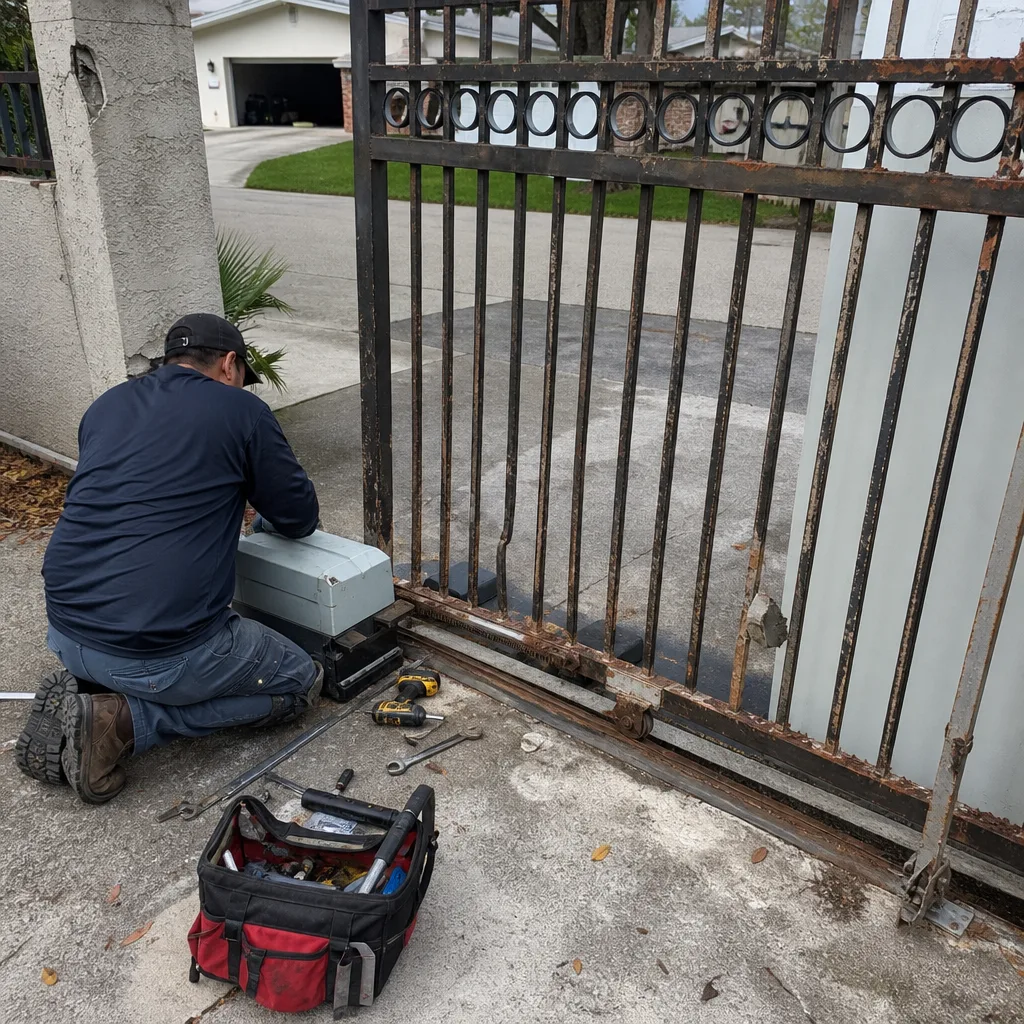 Before
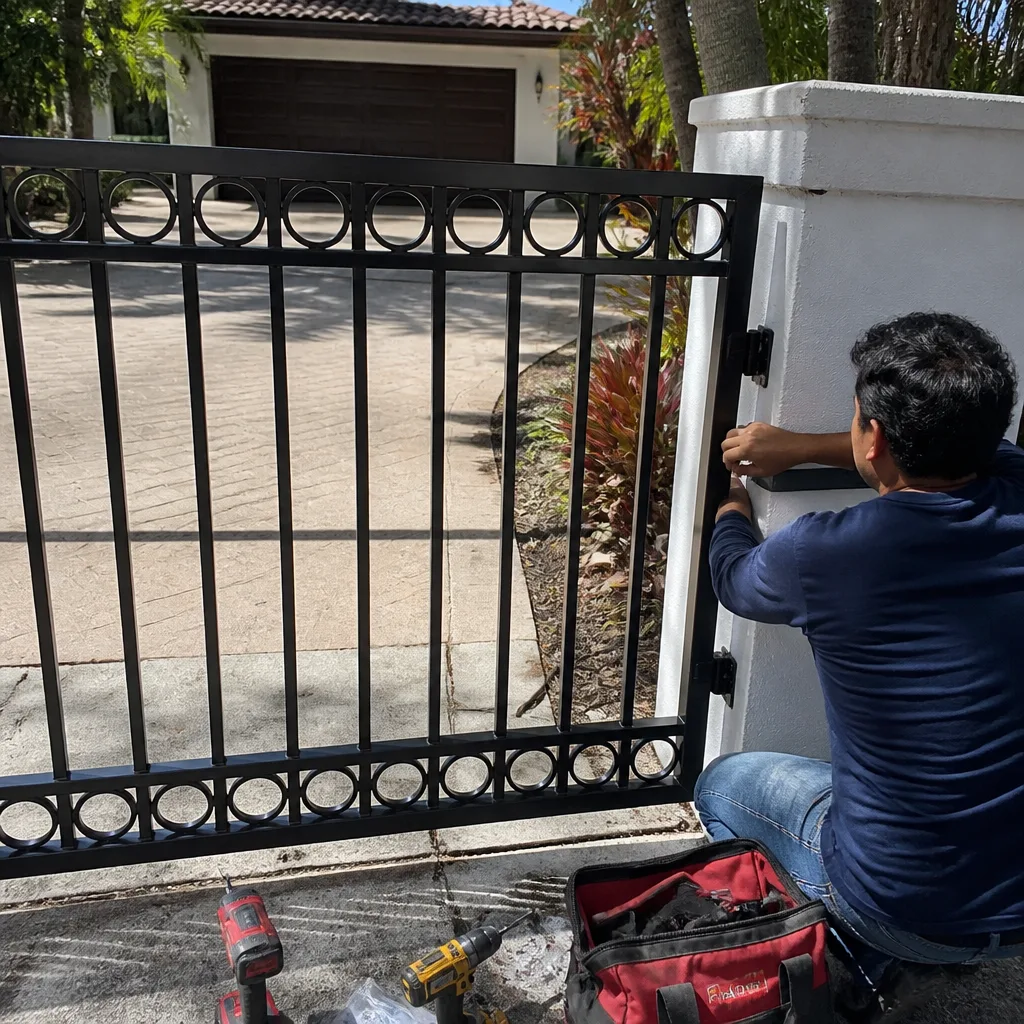 After
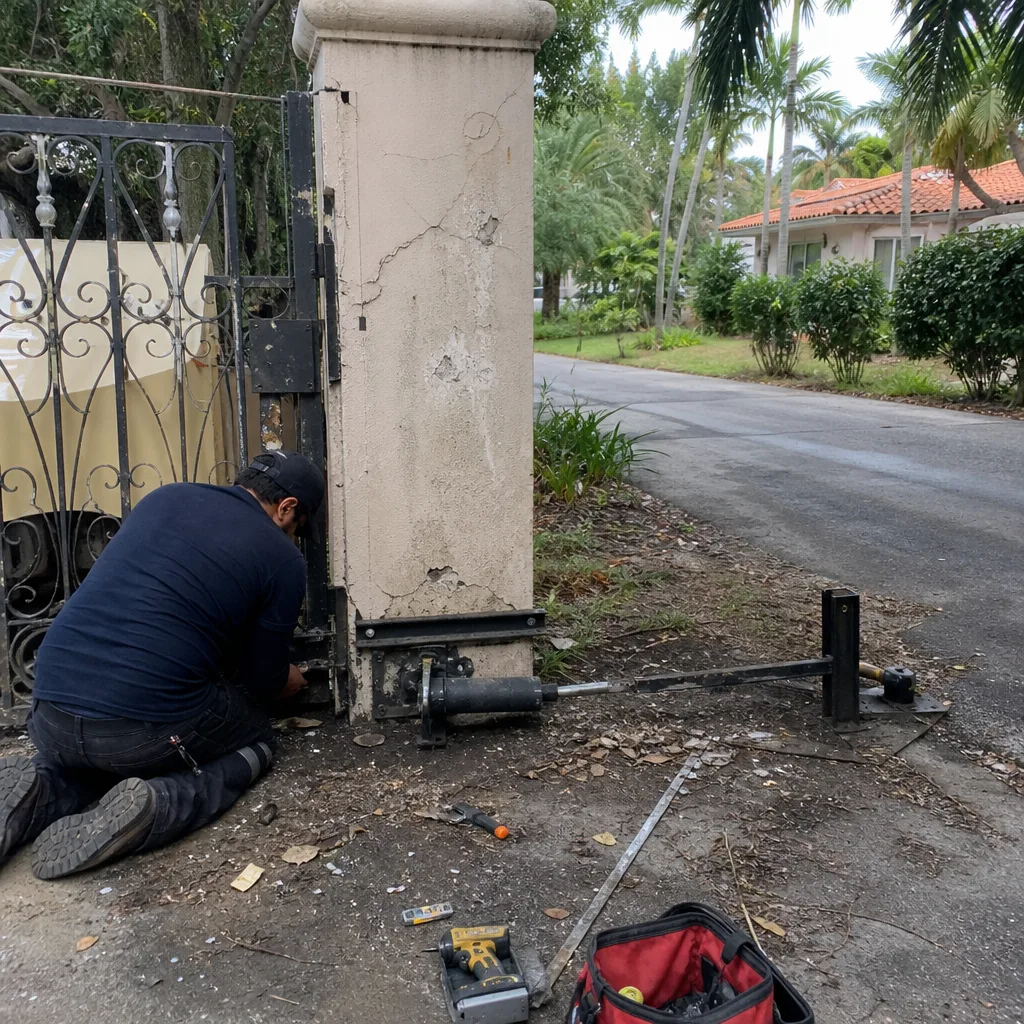 Before
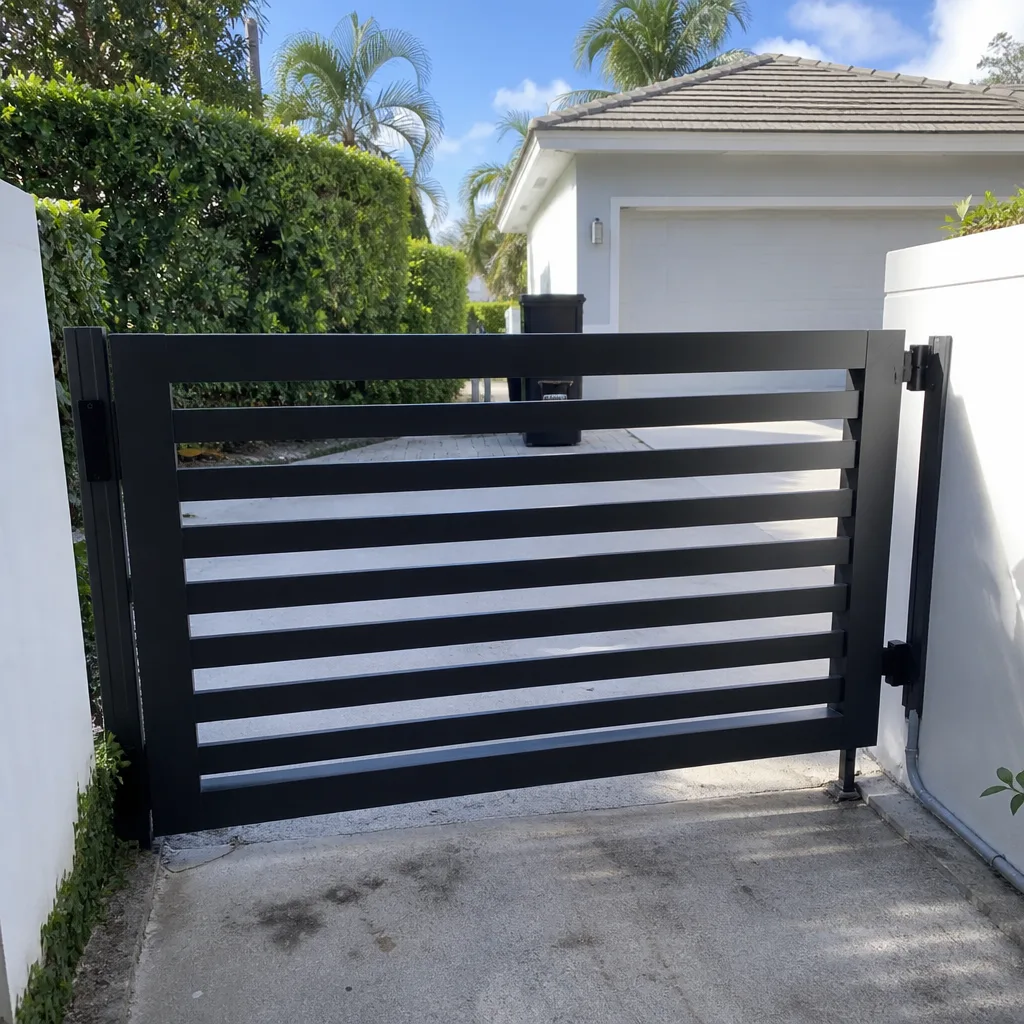 After